
Quick Answer
The clearest septic tank replacement signs are repeated backups, slow drains in every fixture, sewage odor, standing water or bright green grass over the drainfield, and a tank older than 25 years.
If sewage is backing up into your home right now, or you see standing water over the tank, call today. We can usually get out the same day across metro Atlanta.
Most homeowners do not think about their septic tank until something goes wrong. By the time sewage backs up into a tub or the yard starts smelling, the system has usually been struggling for a while.
We have been diagnosing failing tanks across metro Atlanta for 13 years. These are the eight septic tank replacement signs we see most. This is also what we look at before telling a homeowner they need a full septic tank replacement in Atlanta instead of a repair. If any of this sounds familiar, our septic tank repair team in Atlanta can usually tell you which one you are dealing with in a single visit.
What does it mean if sewage keeps backing up into my drains?
A backup that happens once might be a clog. A backup that keeps coming back, especially into your lowest drain, usually means the tank is full, failing, or both.
We get this call a lot from older homes in Marietta and Smyrna. The homeowner pumped the tank a few months ago, and sewage is already backing up again. That pattern usually points to a cracked tank, a collapsed baffle, or a drainfield that can no longer absorb water.
If sewage is coming up into a tub, sink, or floor drain right now, that is not a wait-and-see situation. Our emergency septic pumping in Atlanta team can get a truck out the same day in most cases. We will tell you on site whether you are looking at a repair or a replacement.
Why are all my drains running slow at the same time?
One slow drain is a plumbing problem. Every drain running slow at the same time is a septic problem.
When a tank is reaching the end of its life, solids build up faster than the system can handle. Water has nowhere to go, so it backs up the pipe instead of draining through. We wrote a full breakdown of why all your drains might be running slow at the same time if you want to rule out the easier causes first.
Last month we pulled a 1,250-gallon tank in Vinings that had not been serviced in nine years. Every drain in the house was running slow, and the inlet baffle had completely disintegrated. That tank needed a full replacement, not another pump-out.
Is it normal to smell sewage inside or outside my house?
No. A properly sealed septic tank should not smell, inside the house or out in the yard.
A sewage smell usually means gas is escaping somewhere it should not. That can be a dry trap, a failed vent, or a crack in the tank itself letting odor seep through the soil. We covered the most common causes in why there might be a sewage smell in your yard near the septic tank.
In homes built before 1985, especially in DeKalb County and parts of Buckhead, the original concrete tanks are showing their age. Hydrogen sulfide gas corrodes concrete from the inside over decades. That corrosion is often what lets the smell out.
Can standing water or green grass over my drainfield mean I need a new tank?
Yes, and this is one of the most expensive signs to ignore. Standing water or unusually bright green grass over your drainfield means the soil is too saturated to absorb any more wastewater.
We see this constantly in Gwinnett County, where red clay soil drains slowly to begin with. After a few days of spring rain, a drainfield that was already struggling gets pushed over the edge. If you want more detail, our guide on why there is standing water over your drainfield walks through what we check first.
A saturated drainfield does not always mean the tank itself is bad. But if the field has failed, replacing just the tank will not fix the problem. In a lot of cases we end up recommending drainfield installation in Atlanta alongside the tank, especially in homes built before 1990 where the original field was sized for a smaller household.
See this at your home? Call us now.
We serve Cobb, DeKalb, Fulton, and Gwinnett counties. We can usually get out the same day.
Do gurgling or bubbling pipes mean my septic tank is failing?
Gurgling on its own is not always serious. Gurgling combined with slow drains, odor, or a tank that has not been pumped in years is a different story.
That sound is air being pushed back through your plumbing because the tank or the line out to the drainfield is blocked. We see this a lot in homes around Austell and East Point, where the original pipe runs are 40 to 50 years old. Our article on why your toilet gurgles after you flush covers the early-stage version of this.
A few weeks ago we ran a camera down a line in Fairburn and found the outlet pipe nearly collapsed from age. The gurgling had been going on for months before anyone called.
How old is too old for a septic tank in Georgia?
A concrete tank typically lasts 25 to 40 years. Fiberglass and plastic tanks run 20 to 30 years. Steel tanks fail earliest, often by 15 to 25 years.
If your home was built before 2000 and the tank has never been replaced, you are likely closer to the end of its life than the beginning. Most failures we see in metro Atlanta happen between years 15 and 25. That is especially true in homes with the original steel or early concrete tanks.
Age alone is not always a reason to replace. But age combined with any of the other signs in this list usually tips the decision toward replacement rather than another repair. A tank that has been kept on a regular pumping and inspection schedule tends to reach the far end of that range, while one that has been neglected often shows trouble much earlier. Our septic maintenance tips for Georgia homeowners cover the habits that help a tank last as long as possible.
Is pumping my tank every year a sign I need a replacement?
If you are pumping every 12 to 18 months just to keep things running, that is not maintenance. That is a system telling you it cannot do its job anymore.
The EPA recommends pumping every 3 to 5 years for a typical household. In Atlanta we usually tell people to plan on every 3 to 4 years because of our clay soil. If your septic tank pumping in Atlanta schedule has crept down to once a year, something is wrong upstream. Usually that means a cracked baffle letting solids pass straight into the drainfield.
Our guide on how often you should pump your septic tank covers what a normal schedule looks like. If your schedule does not match that, it is worth finding out why before the drainfield takes the damage too. Our breakdown on how to find the best septic pumping service in Atlanta also covers what a reliable pump-out should include.
This is fixable. Call us today.
We serve Marietta, Smyrna, Vinings, Austell, and all of Cobb County. Written quotes before any work starts.
What happens if my septic system fails an inspection?
A failed inspection is not a suggestion. Georgia health departments can issue an order to stop using the system. That order stands until it is repaired or replaced.
This comes up most often during home sales. If you are buying or selling a home on septic, our guide on whether you need a septic inspection before buying a house in Georgia explains how that process works and what a failed result means for closing.
Our septic inspection in Atlanta starts at $475 for a basic visual check, or $700 with a full camera inspection of the lines. Either way, a failed inspection gives you a clear list of what needs to happen next. You will know if you are looking at a repair or a replacement instead of guessing. If you want to know what to expect on the day, our piece on how long a septic inspection takes in Georgia covers the full 2 to 4 hour visit and when the report comes back.
Should I repair my septic tank or replace it?
Here is how we sort it out on site, based on what we find when we open the tank.
| What we find | Usual decision |
|---|---|
| Cracked or collapsed tank walls | Replace |
| Broken inlet or outlet baffle, tank under 20 years old | Repair |
| Saturated or failed drainfield | Replace drainfield |
| Roots growing into the tank body | Replace |
| Tank 25+ years old with multiple symptoms | Replace |
| Failed Georgia DPH inspection | Usually replace |
| Backups continue despite recent pumping | Replace |
We use a simple rule for the gray areas. If repair costs would run more than half of what a full replacement costs, replacement is usually the better value. A $4,000 repair on a tank that would cost $7,000 to replace rarely makes sense. The same tank may need another repair within a year or two anyway.
How much does septic tank replacement cost in Atlanta?
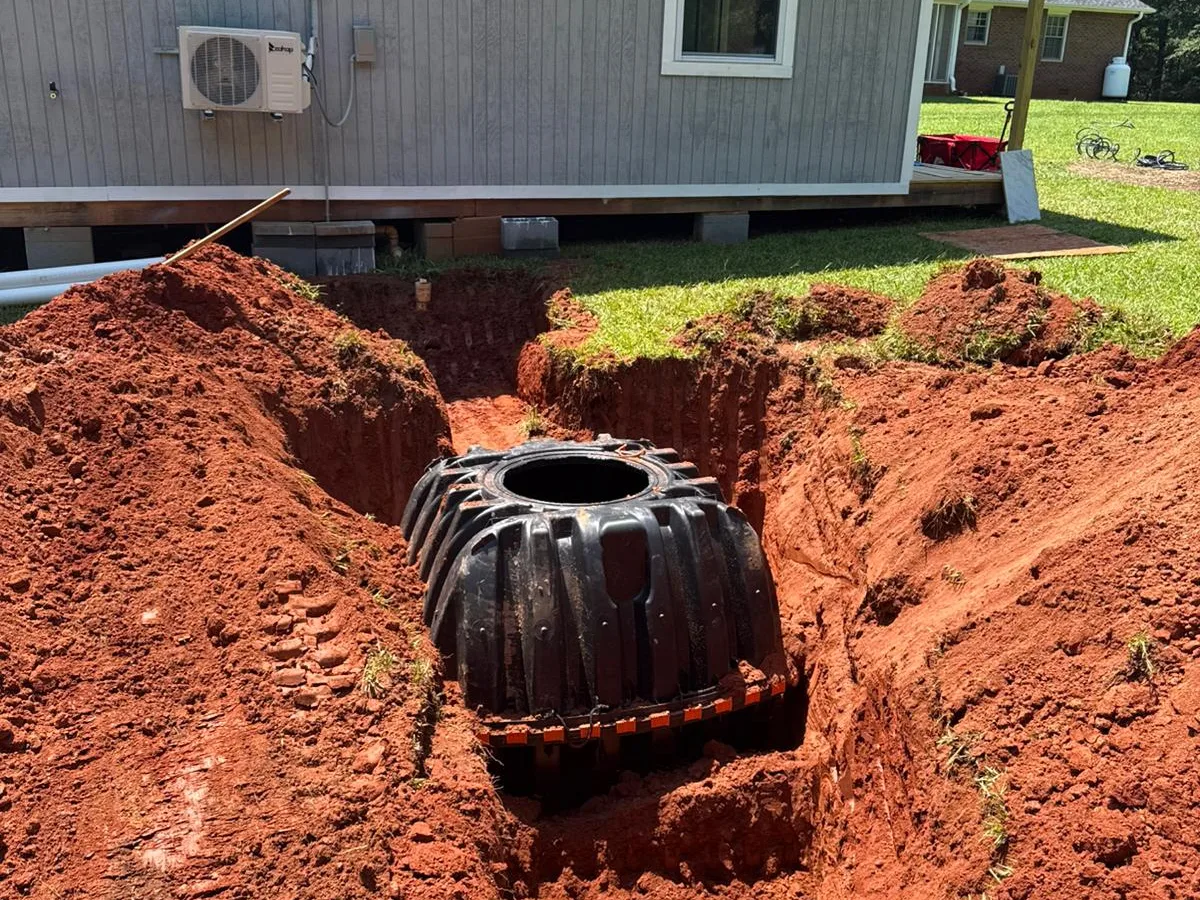
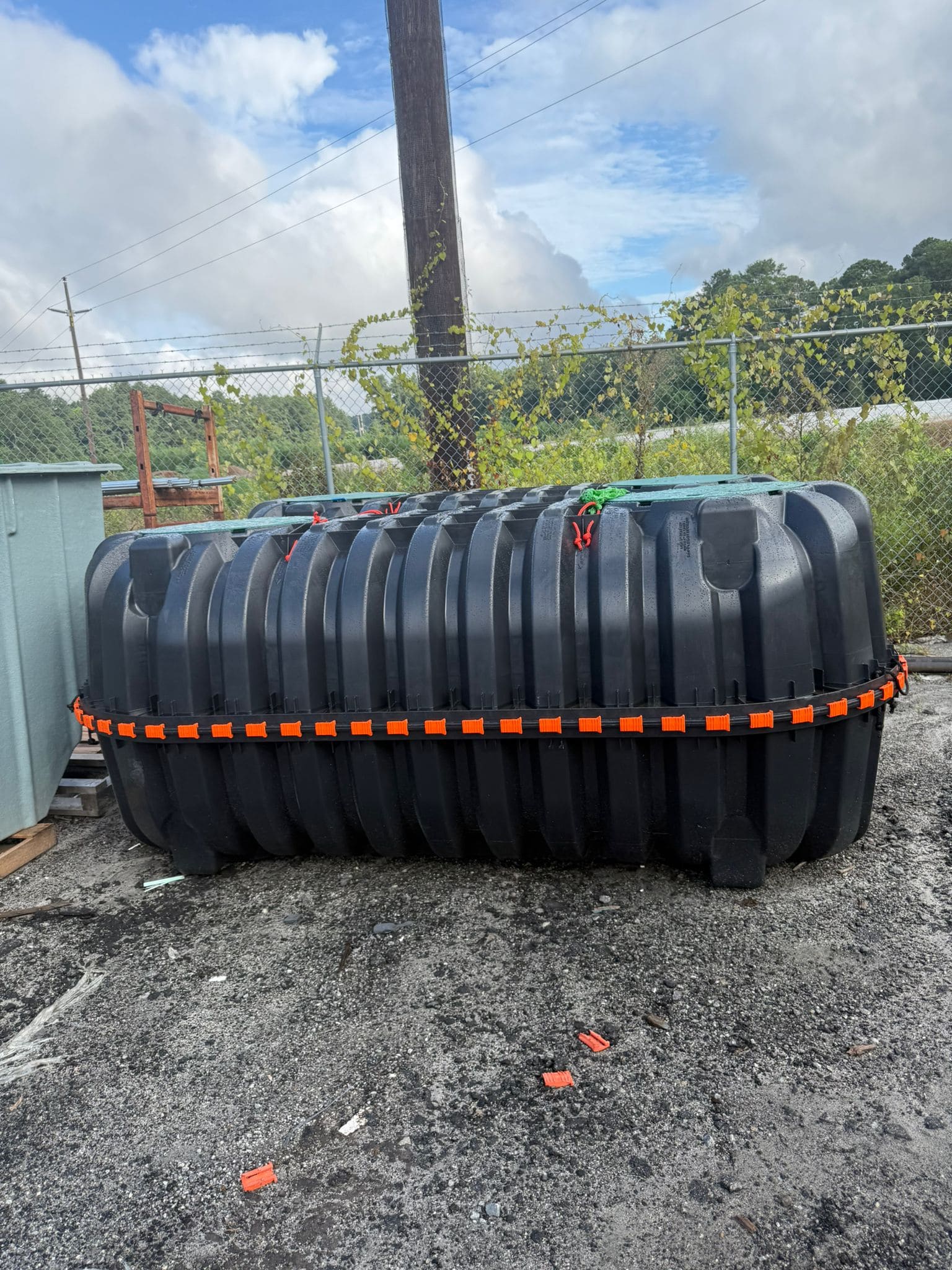
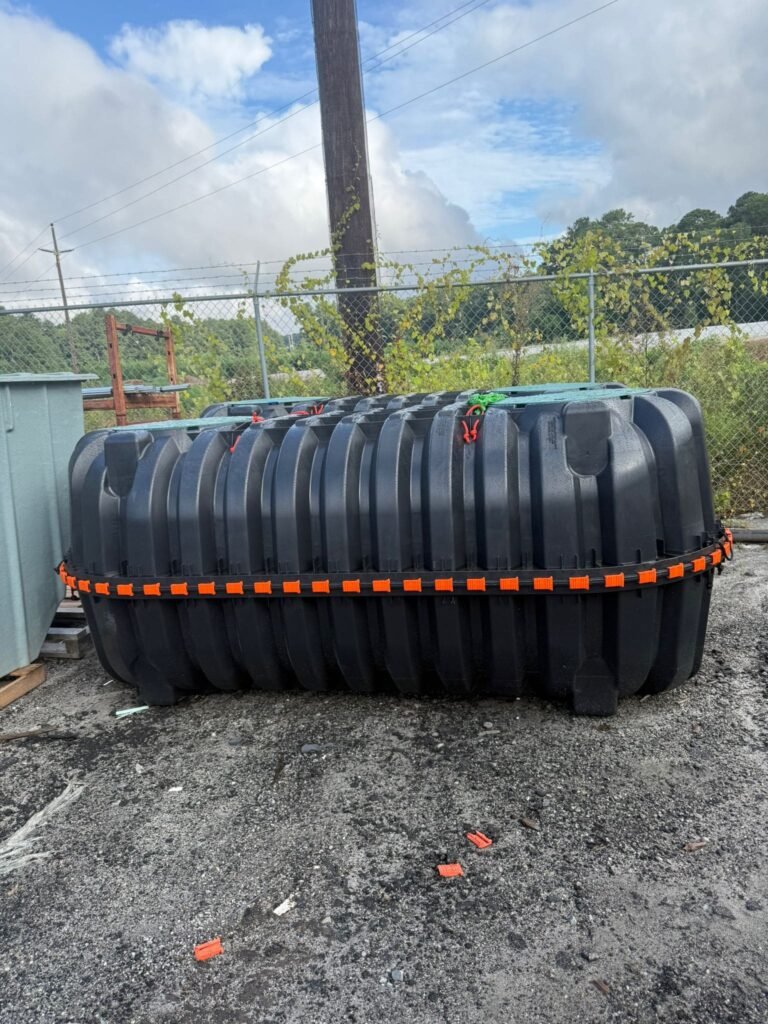
A tank-only replacement in metro Atlanta usually runs $5,000 to $12,500. The price depends on tank size, typically 1,000 to 1,500 gallons. It also depends on soil conditions, drainfield condition, county permit fees, and how hard the site is to access.
If the drainfield needs to be replaced along with the tank, the full project usually runs $7,500 to $15,000. Homes in clay soil counties like Cobb County and DeKalb County tend to land at the higher end. The clay makes excavation slower and sometimes requires engineered fill.
For comparison, a minor repair like a baffle or riser runs $500 to $1,800. A major repair, like a cracked tank or pump failure, runs $1,800 to $5,500. Once you are past that range, a septic tank replacement is usually the better long-term value.
What should I do if I think my septic tank needs replacing?
Start by cutting back on water use. Hold off on extra laundry loads, long showers, and running the dishwasher more than once a day. This buys time and keeps a struggling system from backing up while you get it checked.
Next, get a professional diagnosis instead of guessing. A technician needs to open the tank, check the baffles, and look at the drainfield condition before anyone can say repair or replace with any confidence.
Finally, get a written quote before approving anything. A good quote separates repair options from replacement costs. That way you can compare them side by side. If you have already been pumping every year or seeing backups despite recent service, our septic tank repair in Atlanta team can usually give you that answer in one visit.
We have seen this before. We can help.
We serve Sandy Springs, Buckhead, East Point, Atlanta, Fairburn, and all of Fulton County.
When should I call right away versus wait a few days?
Call right away if any of these are true:
- Sewage is backing up into a tub, sink, or floor drain, even if it has happened before
- You see standing water or smell sewage over the tank or drainfield, especially after rain
- Your tank is 25 years or older and you are seeing any of the signs above
- You failed a septic inspection and need a repair-or-replace answer before closing
These can usually wait a day or two, but should still get on the schedule soon:
- All your drains are running slow at the same time with no backup yet
- You have been pumping every 12 to 18 months instead of the usual 3 to 4 years
- You hear gurgling but have not noticed a smell or backup
Either way, our septic tank repair team in Atlanta can usually get you scheduled within a day or two. If you are not sure which list you fall into, call 404-694-3060 and describe what you are seeing.
Frequently asked questions about septic tank replacement signs
How do I know if I need a septic tank repair or a full replacement?
A single broken part, like a baffle or a lid, is usually a repair if the tank is under 20 years old. A cracked tank, a failed drainfield, or recurring backups in a tank over 25 years old usually means replacement. Our septic tank repair team in Atlanta can tell you which one you are dealing with in one visit.
How long does a septic tank replacement take in metro Atlanta?
The actual installation usually takes 1 to 2 days once the crew is on site. Getting there takes longer. Georgia DPH and county permits typically take 1 to 3 weeks depending on the county. Plan for 2 to 4 weeks total from your first call to a finished system.
How much does septic tank replacement cost in Atlanta?
Most tank-only replacements in metro Atlanta run $5,000 to $12,500. If the drainfield also needs replacing, the full project usually runs $7,500 to $15,000. Clay soil counties like Cobb and DeKalb often land at the higher end.
Do I need a permit to replace a septic tank in Georgia?
Yes. Every new septic system in Georgia needs a permit from the county health department under the Georgia DPH on-site sewage program. The permit confirms the new tank and drainfield are sized correctly for your household and soil type.
What happens if I ignore the warning signs and keep using a failing septic tank?
The system keeps getting worse. Backups become more frequent and the drainfield gets more saturated. A repair that costs $1,800 today can turn into a much larger replacement within a few months if the drainfield fails on top of the tank. Our septic tank repair in Atlanta team can usually catch this before it gets to that point.
Which areas do we cover for septic tank replacement and repair?
We cover septic tank replacement and repair across metro Atlanta. In Cobb County we serve Marietta, Smyrna, Vinings, and Austell. In Fulton County we cover Sandy Springs, Buckhead, East Point, and Fairburn. We also cover DeKalb County and Gwinnett County. Call 404-694-3060 and we can usually schedule same-day or next-day service.
Ready to find out if you need a repair or a replacement?
We serve Cobb, DeKalb, Fulton, and Gwinnett counties. Septic inspection starts at $475, written quotes, DPH certified.