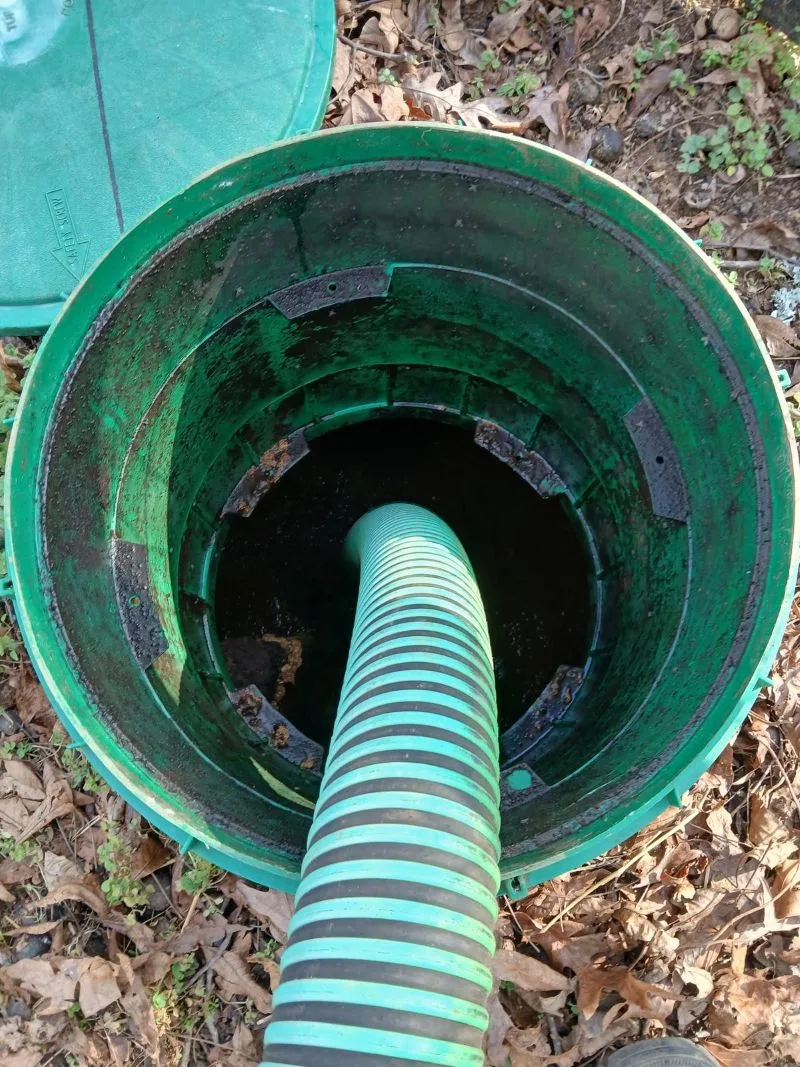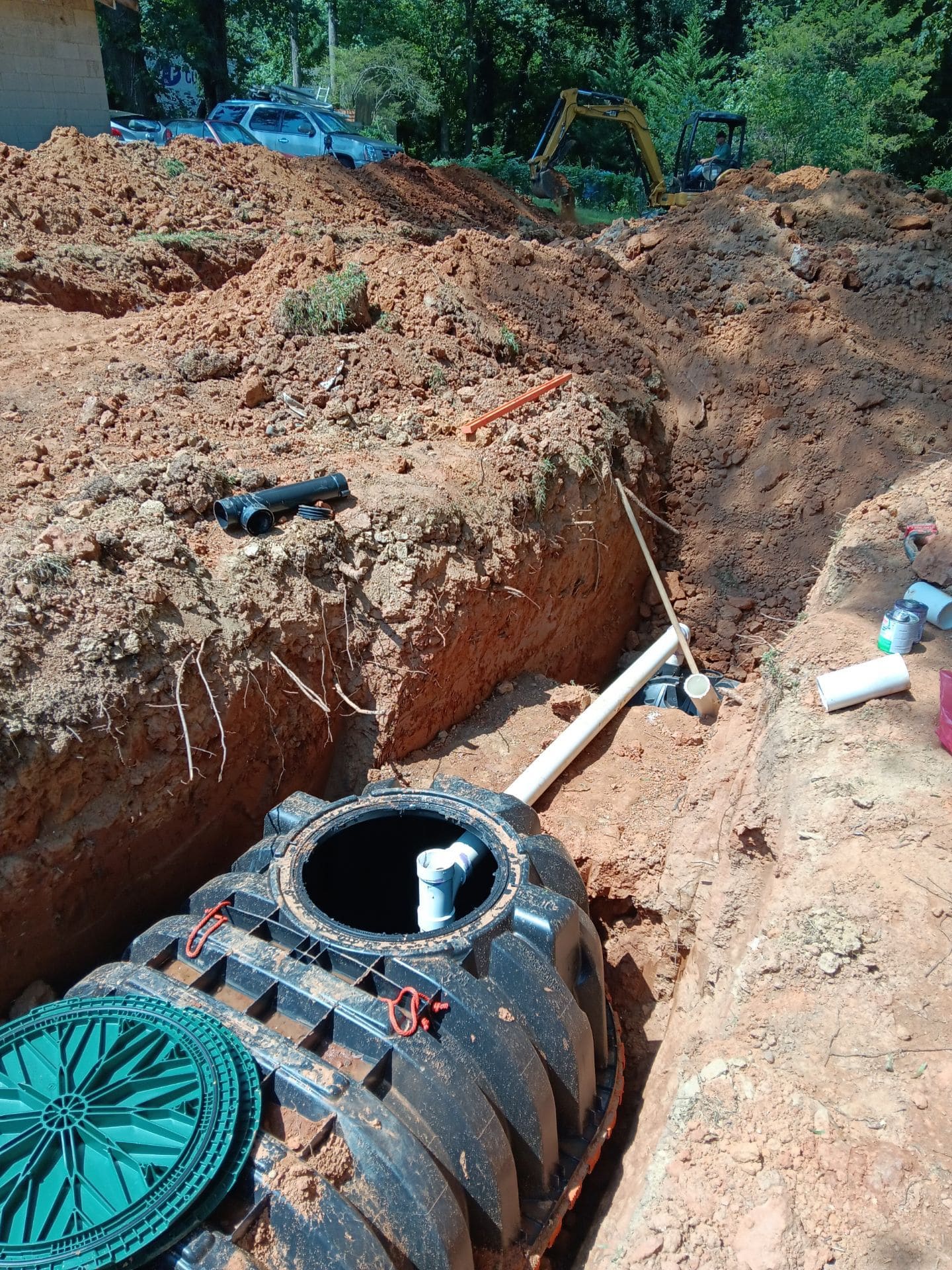
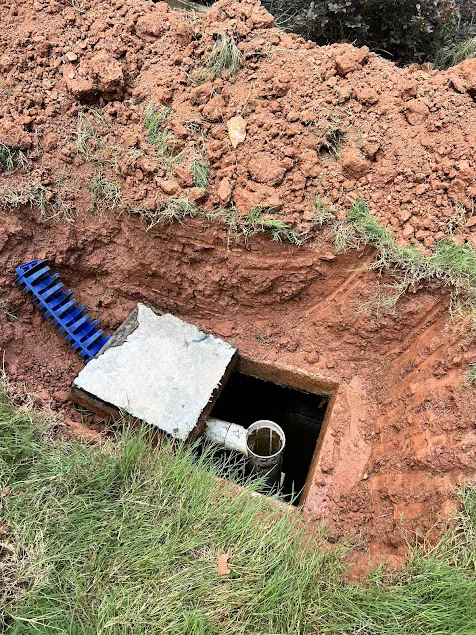
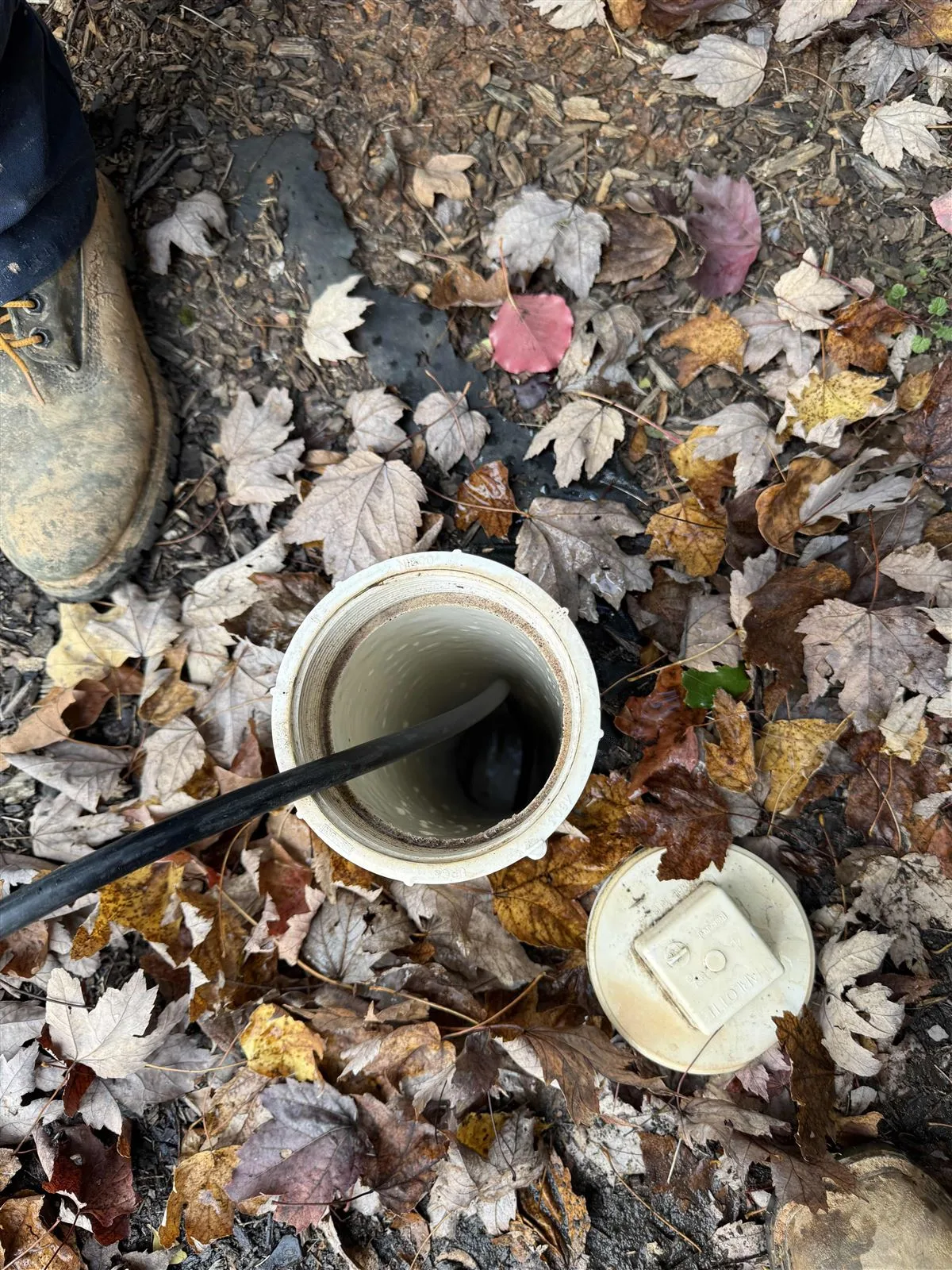
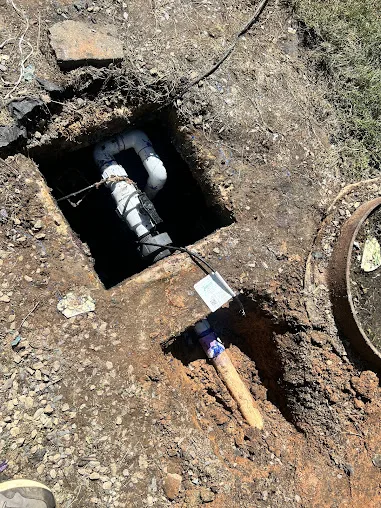
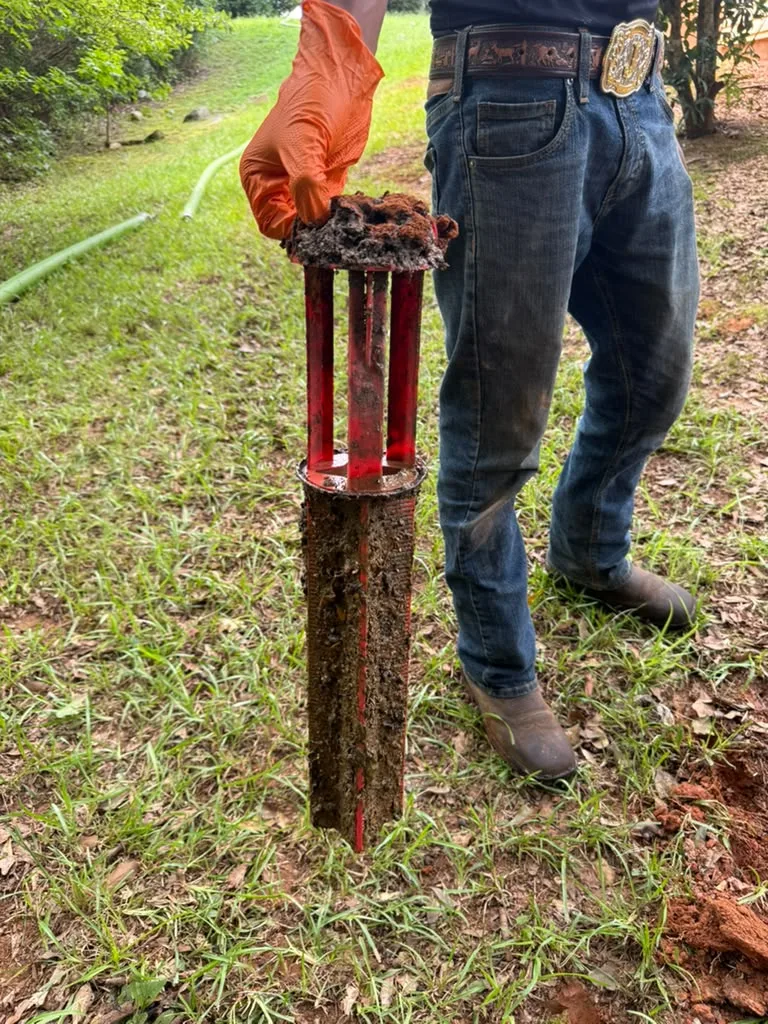
Need to know what condition a septic system is in, for a home sale, a lender or your own peace of mind? Our DPH-certified septic inspectors check the tank, baffles, pipes, distribution box and drainfield, run a flow test, and tell you plainly what is working and what is not. You get a written report with photos before we leave. A standard inspection is a flat $475 and takes about 4 hours.
Our own Georgia-certified septic inspectors. No subcontractors.
We know the red clay, the county rules and how older systems wear.
Normal-hours price, quoted before we come out.
A septic system inspection looks at the whole system, not just the tank. Most problems we find in metro Atlanta start somewhere you can’t see from the yard, like a broken baffle or a field line that has slowly filled with solids. So we open it up, check every part, and run water through it under a real load.
Ready to book? We schedule fast to keep your timeline on track.

A home inspector usually doesn’t open the septic tank, so a separate septic inspection is how buyers, sellers and lenders find out what condition the system is in before closing. We report what we find, whoever is paying for the inspection. We never make a report look better to help a sale go through, or worse to sell a repair.
Find out the condition of your system before you list, on your own schedule. If something isn’t working, you can fix it or price it in before it turns into a fight at closing.
Sellers can read more about a septic inspection for a home sale in Atlanta
Know what you’re buying before you close. If part of the system isn’t working, the report shows exactly what and why, so you can talk repairs or price with the seller. Our reports are accepted by most lenders, including FHA and VA. Not sure you need one? See whether Georgia requires a septic inspection to buy a house
Need a septic inspection anywhere in metro Atlanta? Call 404-694-3060 and we will tell you how soon we can be there.
A standard septic system inspection is a flat $475 and covers the tank, baffles, pipes, distribution box and drainfield. When the question is the lines, like roots, a sag or a crushed pipe, we pump the tank and run a camera through them. Pumping plus a camera inspection runs about $700 to $850 for a home, and commercial properties get a quote on the call. Buyers often ask for it on older homes, or when a lender wants more than a visual check. If the camera finds a damaged pipe, that work is usually sewer line repair, and we can quote it on the same visit.

FHA and VA lenders want written proof of the septic system’s condition before they approve a mortgage, and a phone call doesn’t count. Our reports are accepted by most FHA and VA lenders across metro Atlanta. They list each part of the system, what condition it is in, and photos of what we found. If your lender needs a set format, tell us when you book and we’ll confirm it first. Georgia systems also fall under the state’s Georgia DPH On-Site Sewage Management rules, and any repair needs a county permit.
Ready to book? We schedule fast to keep your timeline on track.
We know a closing date doesn’t move. Call us with the timeline and we’ll tell you straight away how soon we can get there. Our reports tell everyone the same thing, the true condition of the system, which is why agents can hand them to both sides. Agents who send us clients regularly can ask about priority scheduling.
For an urgent pre-closing inspection, call and tell us you’re the agent on the deal.
We publish our inspection prices so you know what you're paying before you book.
| Inspection Type | Price | What’s Included |
|---|---|---|
| Standard septic inspection | $475 flat | Every part checked, flow test, written report with photos |
| Buying or selling a home | $475 flat | Same inspection, with a report your lender and agent can use |
| Inspection with pumping and camera | About $700 to $850 for a home | Tank pumped and a camera run through the lines |
| Commercial property | Quoted on the call | Georgia EPD compliance documentation included |
For prices county by county, see septic inspection cost across metro Atlanta. Planning an addition, more bedrooms or more seats? We can tell you if your septic system is the right size for it. For a home it comes down to bedrooms, and for a business it’s how many people or meals it handles each day. Call us with your plans, and if the system needs to change, it usually starts with soil testing and septic permits.

Plan on about 4 hours. Our DPH-certified septic inspectors follow the same 8 steps every time, whether it’s a pre-listing check or a full real estate inspection. You can read more about how long a septic inspection takes in Georgia.
We locate the tank and access lids, marked or unmarked, and protect the surrounding yard before any equipment is placed.
We open the lid, measure sludge and liquid levels, and inspect the tank walls and structural condition for cracks or damage.
Inlet and outlet baffles are inspected. These are the most common failure point in Atlanta-area systems. Broken baffles lead to drainfield damage.
We walk the drainfield area checking for saturation, surfacing effluent, odors, and root intrusion. We assess the distribution box if accessible.
We flush water through the system under real load, watching it flow from the house through the tank toward the drainfield, to catch problems a visual check misses.
We use dye testing to verify drainfield absorption when surfacing is suspected but not visually confirmed.
Every component is photographed, including the tank interior, baffles, lid condition, drainfield surface. Photos are included in the written report.
Before we drive away, we write up the condition of each part of your system and walk you through anything that isn't working.
There’s no pass or fail. The report tells you the condition of each part of your system in plain English, what is working, what is wearing and what is not. We describe the system as it is, whoever ordered the inspection.
Do not wait for a backup. Any one of these signs means you should book an inspection today.
More than one drain slow at the same time usually points to the tank or the field, not a single clog.
A sewage smell inside the house or near the tank means something isn’t sealed or isn’t draining. Call us.
Wet ground or bright green grass over the tank or drainfield can mean effluent is coming to the surface. That’s a health risk, so have it checked right away.
Water coming up in a tub, toilet or floor drain is an emergency. Stop using water and book emergency septic pumping.
Most Atlanta-area homes should be inspected every 3 years. Georgia’s red clay soil drains slowly, increasing drainfield stress between services.
A pre-purchase or pre-listing inspection protects buyers and means no surprises at closing. Same-day reports keep timelines on track.
Georgia’s red clay soil drains more slowly than sandy soils found in other regions of the country. Slower drainage accelerates drainfield saturation, which is why Atlanta-area homeowners should inspect on the shorter end of the national recommendation.
| Situation | Recommended Frequency |
|---|---|
| Standard household (1-4 people) | Every 1-3 years |
| Heavy usage (5+ people) | Annually |
| Before buying or selling a home | Immediately |
| After significant flooding or heavy rain | Immediately |
| Older systems (25+ years) | Annually |
| Commercial properties | As the county requires. Call to confirm. |
Ready to book? We schedule fast to keep your timeline on track.

Ready to book? We schedule fast to keep your timeline on track.
Our own Georgia-certified inspectors on every job. No subcontractors on your property.
We know Metro Atlanta's soils, county codes, and failure patterns.
Documented on-site, delivered before we leave your property.
What we quote is what you pay, with no add-ons once the tank is open.
We report the system as it is. We don't hide problems to help a sale or invent them to sell a repair.
Every repair we perform is backed by our 1-year warranty.
Posted on Google![]()
Barrington FergusonTrustindex verifies that the original source of the review is Google.
Brian has always been a good resource when it comes to any of my septic projects. Always goes above my expectations.Posted on Google![]()
Fraz KhawajaTrustindex verifies that the original source of the review is Google.
These guys do miracles!! Very satisfied with the service they gave on my property and they explained everything very we’ll definitely recommend them to you!Posted on Google![]()
LA WilliamsTrustindex verifies that the original source of the review is Google.
Very attentive, Knowledgeable and proactive.Posted on Google![]()
LadyLawDoggTrustindex verifies that the original source of the review is Google.
If it wasn't for your company telling me the truth about my Septic tank I would have been out over $15 000 00 dollars for a lie from another Company told me. I WILL NEVER HIRE NO ONR BUT YOUR COMPANY if and when I need you. Your company has my highest respect and I recomend you Brian to anyone if they asked YOU HAVE MY FAMILY'S SEAL OF APROVAL KEEP IN TOUCH THANKS 😊 🙏Posted on Google![]()
Barbara RexachTrustindex verifies that the original source of the review is Google.
GREAT SERVICE, COMMUNICATION AND PRICE ! 10/10Posted on Google![]()
Antonio BrooksTrustindex verifies that the original source of the review is Google.
Installed a drainfield and two septic tanks. Awesome price compared to other estimates and easy to deal with.
We inspect septic systems across the 9 metro Atlanta counties. Many older neighborhoods in Cobb, DeKalb and Gwinnett still have homes on their original systems from before sewer lines reached them, and those are the systems we’re most often asked to check.
Cobb County. Pre-sale and routine septic inspections for older Smyrna homes still on septic.
Fulton County. Older homes off the main roads are still on septic, and buyers often want the lines checked.
DeKalb County. Heavy clay soil, so drainfields here get a close look.
Rockdale County. Pre-sale and routine inspections around Conyers.
Pre-closing and routine inspections around Lilburn and the rest of the county.
If something isn’t working, we can quote septic tank repair in Kennesaw, GA on the same visit.
Pre-sale and routine inspections across Acworth. If a part isn’t working, we give you a written quote for septic tank repair in Acworth, GA before any work starts.
Older systems and heavy clay around Douglasville. See septic inspection near Douglasville, GA.
Not sure we cover your address? Call 404-694-3060 and we'll tell you on the spot.
Most septic inspections take about 4 hours from start to finish, because we check every component, run a flow test and write the report before we leave. Larger tanks, older homes or systems with a pump can take a little longer. We give you a time estimate when you book so you can plan your schedule or coordinate with your realtor.
You do not have to be home, but we recommend it. Being on-site lets us walk you through the findings in real time and answer questions before the written report is delivered. For real estate inspections, the buyer’s agent is usually present. If you cannot be there, we deliver the full written report the same day and follow up by phone to go over anything notable.
Pumping empties the tank. An inspection tells you the condition of the whole system, including the baffles, pipes and drainfield. The standard $475 inspection doesn’t include pumping. If the tank needs emptying, pumping is a flat $575 in normal hours, or you can book pumping plus a camera inspection for about $700 to $850. See our septic tank pumping page for more detail.
It doesn’t end the sale. It gives both sides the facts. Sellers can fix the problem first, and buyers can ask for a repair or a price change. What really hurts a sale is finding a big problem the week before closing, so inspect early. Here’s more on what happens when a septic inspection finds a problem during a sale.
Our reports are accepted by most lenders across metro Atlanta, including FHA and VA. They describe the condition of each part of the system, with photos and measurements. If your lender needs a set format, tell us when you book.
Signs of drainfield failure include standing water or soggy ground above the field lines, unusually lush green grass growing over the drainfield area, sewage odors outside the home, or a system that backs up again shortly after being pumped. Any one of these signs means you should book an inspection immediately. See our drainfield repair page for your options if we find the drainfield isn’t working.
We show you exactly which part isn’t working and why. Most problems we find, like a broken baffle, a cracked lid or a blocked line, can be fixed. Repairs start with a free on-site estimate and a written quote, payment plans are available by agreement, and every repair is backed by our 1-year warranty. See our septic tank repair service.
Yes. Inspecting after heavy rain is ideal for spotting drainfield problems. A saturated drainfield shows visible signs during or after heavy rain that may not be apparent in dry conditions. Georgia’s red clay soil amplifies this effect significantly. If you notice wet patches in your yard after a heavy rain with no obvious cause, book a septic inspection in Atlanta right away, because what you’re seeing may be effluent surfacing from a failing field line.
Yes. Our written reports describe the condition of each part of the system with photos, and realtors and lenders across metro Atlanta accept them. You get the report before we leave. For an urgent closing, call us with your timeline.
We typically schedule within 1-2 business days. For urgent closings, call 404-800-6431 and we will do our best to accommodate same-day or next-day scheduling. We understand real estate timelines are fixed – we work around them, not the other way around. Realtors who use us regularly can ask about priority scheduling for their clients.
Find out the real condition of your septic system. A flat $475, about 4 hours, and a written report before we leave. We’re open Monday to Saturday from 7 AM to 7 PM, and we take emergency calls 24/7.
Monday to Saturday 7 AM to 7 PM. Emergencies 24/7.