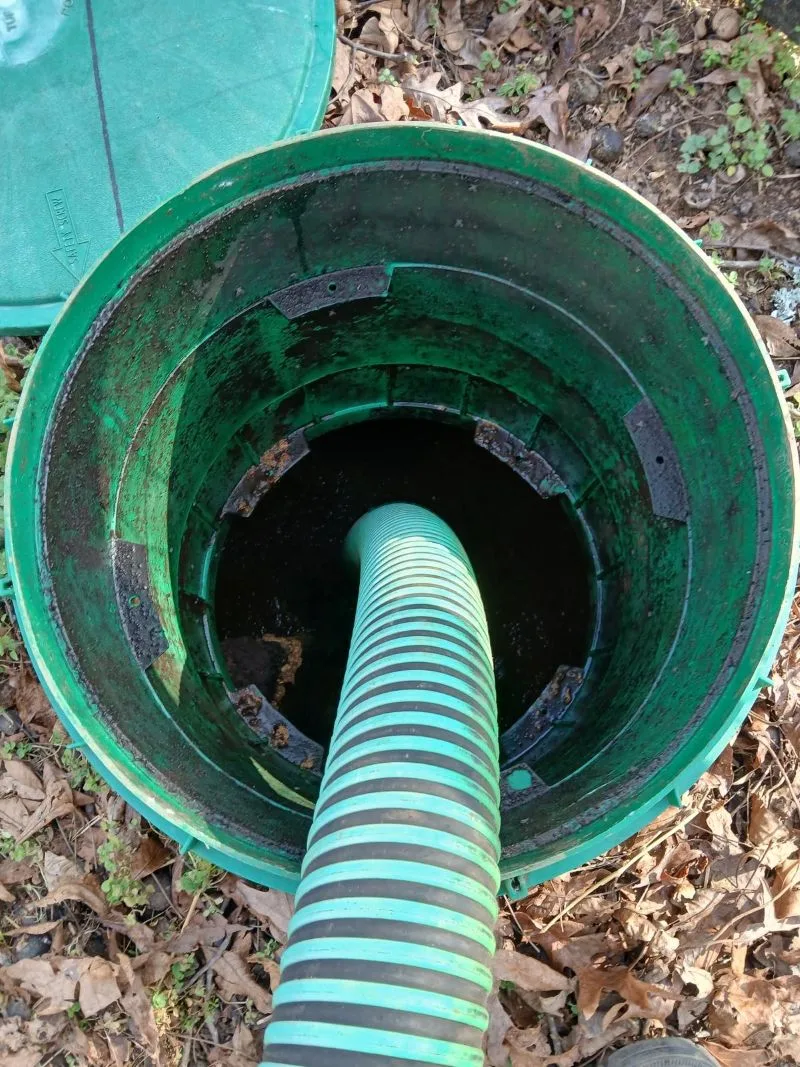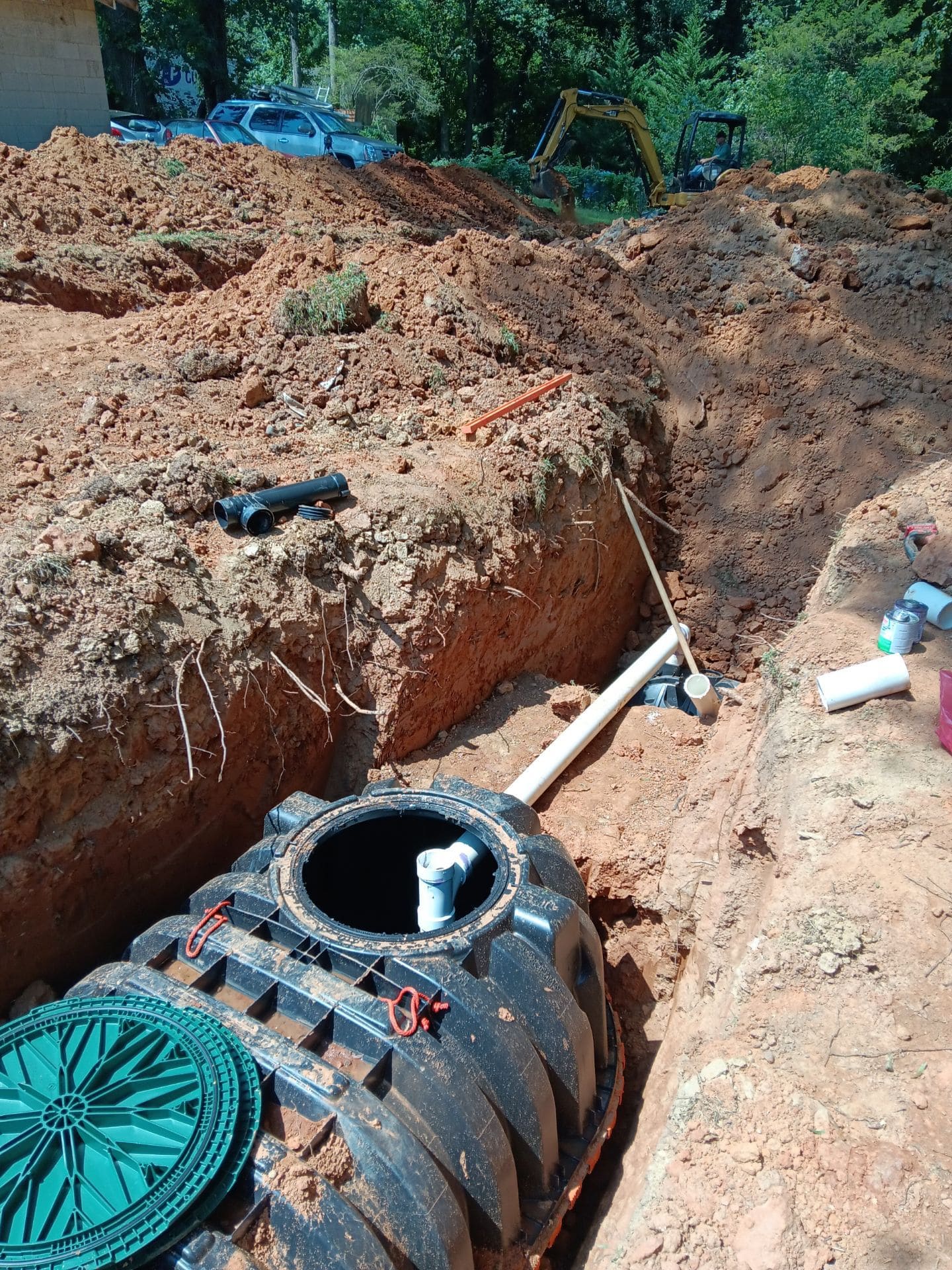
Drainfield Installation in Atlanta, GA - New Leach Fields and Full Replacements

Expert drainfield installation Atlanta homeowners and builders trust – from soil percolation testing and Georgia DPH permitting through final inspection. We handle new construction, failed drainfield replacement, and everything in between. DPH licensed. Call us for a free on-site quote.

 
repair-fix-repairing

DPH Certified

Our technicians are certified by DPH for quality work.

13+ Years Serving Atlanta

Serving for over 13 years.

Flat-rate pricing

No surprises on-site

What Is a Drainfield - and When Do You Need a New One?

A drainfield, also called a leach field, is the network of perforated pipes buried in gravel trenches that distributes liquid waste from the septic tank into the surrounding soil. After solids settle in the tank, liquid effluent flows into these pipes, spreads through the gravel, and filters into the ground.

In Georgia’s red clay soil, drainfields absorb more slowly than in sandy-soil states, which is why Atlanta-area systems saturate and fail earlier than the national average. When your drainfield fails, you typically have two paths: repair or full replacement. The right answer depends on what the camera inspection finds.

Warning Signs Your Drainfield Has Failed

  • Standing water or soggy ground above the field lines, even in dry weather
  • Unusually lush, green grass growing over the drain field area
  • Sewage odors outside the home, especially after rain
  • Slow drains throughout the entire home, not just one fixture
  • Gurgling sounds in pipes or toilets when water drains elsewhere
  • Sewage backup in the lowest fixtures (bathtubs, floor drains)
  • System backs up again within weeks of being pumped

This is why homeowners across DeKalb and Gwinnett consistently choose us for drainfield repair in Atlanta – we understand the local conditions and we explain them plainly.

Septic Tank Pumping7 23 26

Repair vs. Replace – How We Decide

We always start with a camera inspection before recommending installation. If the failure is isolated – one clogged lateral, root intrusion, or a broken pipe – drainfield repair is usually the right and lower-cost answer. Full installation is the right call when:

Repair First When…

  • Failure is isolated to one lateral
  • Clogging is the root cause (not saturation)
  • System is under 20 years old
  • Soil still has absorptive capacity

New Installation When…

  • Entire field has saturated
  • System is 25+ years old
  • Georgia clay permanently waterlogged
  • New home build with no existing field

New Construction vs. Existing Home Drainfield Installation Atlanta

Whether you are building a new home or replacing a failed field on an existing property, the drainfield installation Atlanta process has key differences. We handle both, and the approach matters.


Drainfield Installation for New Homes in Atlanta Metro

New construction in Georgia requires a perc test before permits can be pulled, and permits must be approved before breaking ground on the drainfield. The timeline matters: the perc test must happen before the home’s footprint is finalized, because the drainfield location affects the site plan.

We coordinate with your builder and the county health department to make sure the drainfield design meets Georgia DPH standards, fits within the required setbacks, and passes final inspection before the certificate of occupancy is issued. We work in Cobb, Gwinnett, DeKalb, Fulton, Rockdale, Cherokee, Forsyth, and surrounding Atlanta metro counties.

Typical cost: $6,600-$7,800 for new construction

 Drainfield Replacement for Existing Homes

Replacing a failed drainfield on an existing property involves a different sequence: we assess the old field first, decommission it properly, evaluate the remaining soil capacity, and then design the new system to Georgia DPH specifications. The existing tank is inspected – if it is in good condition and properly sized, it often stays in place. If it is undersized or failing, we address that at the same time.

Leach field replacement in Atlanta is our most common installation job. We handle the permit application, coordinate the county health department inspection, and complete installation in 2-5 days depending on field size and soil conditions.

Typical cost: $7,500-$10,000 for standard residential replacement

Ready to book? We schedule fast to keep your timeline on track.

Our Drainfield Installation Atlanta Process - Perc Test to Final DPH Approval

Every drainfield installation Atlanta project follows a regulated process set by the Georgia Department of Public Health. We manage every step – you do not coordinate with the county or health department.

1. Soil Percolation Test (Perc Test)

Required by Georgia DPH before any installation can be permitted. We schedule and conduct the perc test on your property. The test measures how fast the soil absorbs liquid, which determines system size, trench depth, and pipe layout. Georgia’s red clay often absorbs at 30-60 min/inch vs. 5-10 min/inch for sandy soil. If soil fails the perc test, we evaluate alternative system options.

See our soil testing and permits page for more detail on perc tests in Georgia.

2. Water Table Assessment

We measure the seasonal high water table at your site. Georgia DPH requires a minimum separation between the drainfield and the high water table. In low-lying areas or flood-prone DeKalb and Douglas county neighborhoods, a mound system or aerobic unit may be required if the water table is too high for a conventional field.


3.Design, Excavation, and Installation

We design the field to Georgia DPH specifications: trench depth 24-36 inches, perforated pipes laid on a gravel base, distribution box set to balance flow evenly across all laterals. Trenches are backfilled and graded for proper drainage. Installation takes 2-5 days depending on field size and soil conditions.


4. Georgia DPH Permitting and Final Inspection

We apply for and manage all permits. Georgia Chapter 511-3-1 sets the setback rules: 50 ft from water wells, 25 ft from water bodies, 10 ft from property lines. A county health department inspector reviews the installation before the system can be used. All requirements are published by the Georgia DPH On-Site Sewage Management program. DIY installation is unlawful in Georgia – all work requires a licensed contractor and a county permit.

Need a Drainfield Installed Urgently? Same-Day Assessment Available

If sewage is surfacing in your yard or your system has backed up completely, we can schedule a same-day on-site assessment and get the installation process started immediately. Permit timing is out of our control, but we can start the paperwork the same day you call.

Emergency service available in: Acworth, Vinings, Buckhead, Stone Mountain, Lilburn, Douglasville, Fayetteville, Jonesboro, Smyrna, Decatur, Sandy Springs + all Atlanta metro areas.

Drainfield Installation Atlanta Cost Guide

Drainfield installation Atlanta pricing depends on soil conditions, system type, lot slope, and permit complexity. These are real Atlanta metro ranges, not national averages. We are one of the only local companies publishing actual drainfield installation costs rather than making you call for a quote.

ScenarioPrice Range (Atlanta 2026)Notes
Residential replacement – 3-bed home, standard soil$7,500 – $10,000Most common Atlanta metro job
Partial replacement / minor damage, good access$3,000 – $6,000One or two laterals only
New construction – drainfield only$6,600 – $7,800No existing system to remove
Full conventional system – tank + drainfield$4,000 – $12,000Gravity-fed, standard Georgia soil
Aerobic or engineered system$10,000 – $20,000Poor soil, high water table, steep lot
Leach line replacement only (per linear foot)$20 – $45/linear ft~200 ft typical = $4,000-$9,000 lines alone


Get an accurate quote before committing. Every site is different. Call us and we will schedule a free on-site assessment – perc test, soil evaluation, and a written price range before you decide anything.

Septic Tank Pumping7 23 26

What Affects Your Drainfield Installation Cost

Soil Type and Perc Rate
Georgia red clay drains 3-6x more slowly than sandy soil. A failing perc test may require a larger field, mound system, or aerobic unit – all of which increase cost.
 
Lot Slope and Access
 
Steep lots require more excavation work and may need engineered designs. Tight access (trees, fences, structures) increases labor. We assess this during the site visit.
 
Permit Complexity and County
 
County health department permits run $200-$600 depending on the county. DeKalb and Cobb are typically faster; some rural county timelines run 2+ weeks.

Should You Repair or Replace Your Drain Field?

Drainfield replacement vs. repair in Atlanta depends on three things: how much of the field has failed, how saturated the surrounding soil is, and how old the system is. Here is how we think about it – the same assessment we do on-site.


Repair or Restoration – Usually Right When:

  • Failure is isolated to one lateral line or section
  • Camera shows clogging rather than structural collapse
  • Biomat buildup is primary cause (not soil permeability loss)
  • System is under 20 years old and otherwise in good condition
  • Distribution box is functioning correctly
  • Soil percolation test shows absorptive capacity remains

Full Replacement – Usually Right When:

  • Multiple lateral lines have failed simultaneously
  • Soil saturation is irreversible – clay is permanently waterlogged
  • System is 25+ years old with multiple failing components
  • Percolation test confirms soil can no longer absorb
  • Repeated repairs have not held – the field keeps failing
  • Sewage is actively surfacing – health department may require replacement

We will never recommend replacement if repair will solve the problem. The camera inspection is what makes that honest assessment possible. Without it, you are guessing. If replacement is the right call, see our drainfield installation page or our septic tank repair page for related services.

Ready to book? We schedule fast to keep your timeline on track.

Why Metro Atlanta Homeowners Choose Us

Brian was excellent to work with! He scheduled us quickly and did exactly what he said he was going to do. He was great explaining the process to repair and how to maintain it. Highly recommended and will be referring this company for my clients in the future. Professional and honest…which is what I was looking for!
- Dionne Walker

DPH certified technicians

Georgia-certified on every job. No subcontractors on your property.

13+ years local experience

We know Metro Atlanta's soils, county codes, and failure patterns.

Same-day written reports

Documented on-site, delivered before we leave your property.

Flat-rate pricing

What we quote is what you pay — no add-ons once the tank is open.

Honest assessments

If it's fine, we'll say so. We don't manufacture problems to sell repairs.

1-year warranty

Every repair we perform is backed by our 1-year warranty.

What Is a Drain Field?

A drain field – also called a drainfield, leach field, or field lines – is the underground network of perforated pipes that distributes liquid waste from the septic tank into the surrounding soil. After solids settle in the tank, liquid effluent flows out through these pipes, spreads across the field, and filters slowly through the soil before entering the groundwater.

In Georgia, drain fields are typically installed 2-4 feet below the surface in trenches filled with gravel or aggregate. The pipes sit in that gravel layer, which helps distribute effluent evenly. Because Georgia’s red clay slows absorption dramatically compared to sandier soils, Atlanta-area drain fields take on more stress over time, which is why they fail earlier and why the drainfield repair approach here has to account for local soil science.

The field lines in most Atlanta homes run 50-150 feet long. A standard 3-bedroom home on an average lot requires approximately 300-450 linear feet of drain field. Larger homes or homes on dense clay lots may need more.

drainfield repair

Drainfield Installation Atlanta Service Areas

We provide drainfield installation Atlanta-wide across 9 Metro counties and 20+ cities. Need drainfield installation in Atlanta near you? Call Us  to confirm same-day assessment availability.


Gwinnett County – Lilburn

High residential septic density. Lilburn and the Gwinnett corridor are among our most active installation areas – both new construction and failing field replacements.

Drainfield Installation Lilburn GA →
 

Cobb County – Smyrna

Cobb County installations including Smyrna, Acworth, Marietta, and East Cobb. 

Drainfield Installation Smyrna G

DeKalb County – Stone Mountain

Stone Mountain, Decatur, Lithonia, Tucker, and surrounding DeKalb County areas. Red clay soil density makes DeKalb one of our busiest drainfield replacement markets.

Drainfield Installation Stone Mountain GA →

Rockdale County – Conyers

Conyers and Rockdale County. Consistent installation demand across this corridor, including both replacement work and new construction site builds.

Drainfield Installation Conyers GA →

Buckhead + North Fulton

Buckhead We serve the full Fulton County corridor including Sandy Springs and Alpharetta.

Fulton County Septic Services →

All Metro Atlanta Counties

Cherokee, Forsyth, Fayette, Clayton, Douglas, Henry, Newton, Carroll. If you are in the Atlanta metro and on a septic system, call us to confirm coverage.

All Septic Services →

Not sure if we cover your area? Call us now — we'll confirm in 30 seconds.

What Georgia Homeowners Say

Drainfield Installation Atlanta FAQ

How much does drainfield installation cost in Atlanta?

Drainfield installation Atlanta typically costs $7,500-$10,000 for a standard residential replacement on a 3-bedroom home with average soil conditions. New construction drainfields run $6,600-$7,800. Aerobic or engineered systems for difficult soil or slope conditions cost $10,000-$20,000. Partial replacements can run $3,000-$6,000. County health department permits add $200-$600 depending on the county. Call 404-800-6431 for a free on-site assessment and written estimate.


Yes. Georgia DPH requires a soil percolation (perc) test before any drainfield installation can be permitted. The test measures how fast the soil absorbs liquid, which determines the size and type of system required. We schedule and conduct the perc test as part of our installation process – you do not arrange this separately. If the soil fails the perc test, we evaluate alternative designs such as mound systems or aerobic units appropriate for Georgia’s red clay conditions.


The physical installation takes 2-5 days depending on system size, site conditions, and soil type. However, the full timeline from perc test to final DPH inspection is typically 2-4 weeks, largely driven by the county permit processing time (3-14 days depending on the county). We manage the permit process – you do not coordinate with the county health department. We start the permit paperwork immediately after the perc test so there is no avoidable delay.


Often yes, if the tank is structurally sound, properly sized for the home, and in good condition. We inspect the tank as part of the installation process. If the tank is undersized, cracked, or the baffles are failing, we recommend addressing the tank at the same time. Replacing the drainfield without addressing a failing tank shortens the new field’s lifespan and risks an early return failure, something we want to avoid for you as much as you do.


No. Georgia law requires drainfield installation to be performed by a licensed contractor and inspected by the county health department before the system can be used. Unpermitted installations are illegal, can result in fines, and must be decommissioned and reinstalled by a licensed contractor. We hold all required Georgia DPH licenses and handle every permit – there is no shortcut that avoids the county inspection process.


Drainfield and leach field refer to the same system – the network of perforated pipes buried in gravel trenches that distributes liquid waste from the septic tank into the surrounding soil. Atlanta homeowners use both terms interchangeably. When you call us for “leach field installation in Atlanta GA” or “drainfield installation,” we are providing the same service.


We start with a camera inspection before recommending either. If the failure is isolated – one clogged lateral, root intrusion, or a broken pipe section – drainfield repair is usually the right and significantly lower-cost answer. Full installation is recommended when the entire field has saturated, the soil has permanently lost absorptive capacity, or the system is 25+ years old with multiple failing components. We give you an honest recommendation either way – repair earns us less revenue, but we recommend it when it is the right call.


Schedule Your Drainfield Installation Atlanta Today

Free on-site assessment for drainfield installation in Atlanta. Perc test to DPH approval – we manage the full process. Published pricing. DPH licensed. Serving all 9 Metro Atlanta counties.

Serving Atlanta, GA – Acworth – Vinings – Decatur – Stone Mountain – Lilburn – Douglasville – Fayetteville – Smyrna – Sandy Springs – Buckhead – and 20+ more cities.

Related Septic Services

Septic Tank Pumping 23 26

Septic Tank Pumping

Drainfield installation in progress at a residential site

Drainfield Installation

Septic tank installation work in progress at a residential property

Septic tank Repair