Soil Testing and Septic Permits in Atlanta, GA

Before any septic system can be installed or replaced in metro Atlanta, the county requires a certified soil evaluation and a state permit. Septic Tank Guru handles both – from scheduling your Level 3 soil survey with a DPH-certified classifier to submitting the completed permit application to your county environmental health office. We serve all 9 metro Atlanta counties, and most homeowners have their permit in hand within 2 to 6 weeks.

repair-fix-repairing

DPH-Certified Classifiers

Every soil evaluation is performed by a Georgia DPH-certified soil classifier with $1M+ liability insurance.

Full Permit Submission

We prepare and submit your complete application packet to the county. You never visit the health department.

2-6 Week Turnaround

From soil test scheduling to permit in hand. Most straightforward properties clear in 2-3 weeks.

What Georgia Requires Before a Septic System Is Installed

Georgia’s Department of Public Health governs all on-site sewage systems through Rule 511-3-1 and the Manual for On-Site Sewage Management Systems. Every new septic installation, replacement, or major repair in the state must go through the county environmental health office. The process has two required steps: a certified soil evaluation, then a permit application. Skip either one and the county will not approve your project.

Full details on state requirements, approved products, and certified professional directories are available at Georgia DPH On-Site Sewage Management.

Who Is Authorized to Perform Soil Evaluations

Only professionals certified by the Georgia DPH as Certified Soil Classifiers or Soil Scientists can perform the soil evaluation required for a septic permit. These professionals must carry at least $1 million in liability insurance. A general contractor, plumber, or septic installer cannot perform this evaluation. Septic Tank Guru coordinates directly with certified classifiers so your report meets county standards on the first submission. If your property needs a full septic system engineering plan, we handle that coordination as well.

This is why homeowners across DeKalb and Gwinnett consistently choose us for drainfield repair in Atlanta – we understand the local conditions and we explain them plainly.

Soil Percolation Test Diagram

What Does Soil Testing and Permitting Cost in Atlanta

Every property is different, but here are the typical cost ranges for soil testing for septic system projects across metro Atlanta.

Level 3 Soil Survey
$400 – $800
Depends on property size, number of borings, and site access. Properties under 1 acre with clear access usually fall at the lower end. Larger properties, wooded lots, or steep slopes push toward $800.
📄
County Permit Fees
$150 – $1,000+
Varies by county. Fulton runs $750+. Rural counties charge $100 to $300. See the county table above for your specific area.
📈
Level 4 Add-On
+$200 – $400
Required when Level 3 results show challenging conditions. Adds Ksat testing for properties with shallow bedrock, high water tables, or extremely tight clay.
Planning a full installation? The soil testing for septic system permitting is a small fraction of the total project cost, but it determines what type of system you can install and what that system will cost. If you are comparing overall project costs, our septic installation page breaks down the full price range from permit to final inspection. Homeowners who keep up with regular septic pumping on a 3-5 year schedule can extend system life by decades and avoid early replacement.

Ready to book? We schedule fast to keep your timeline on track.

What Is a Level 3 Soil Survey

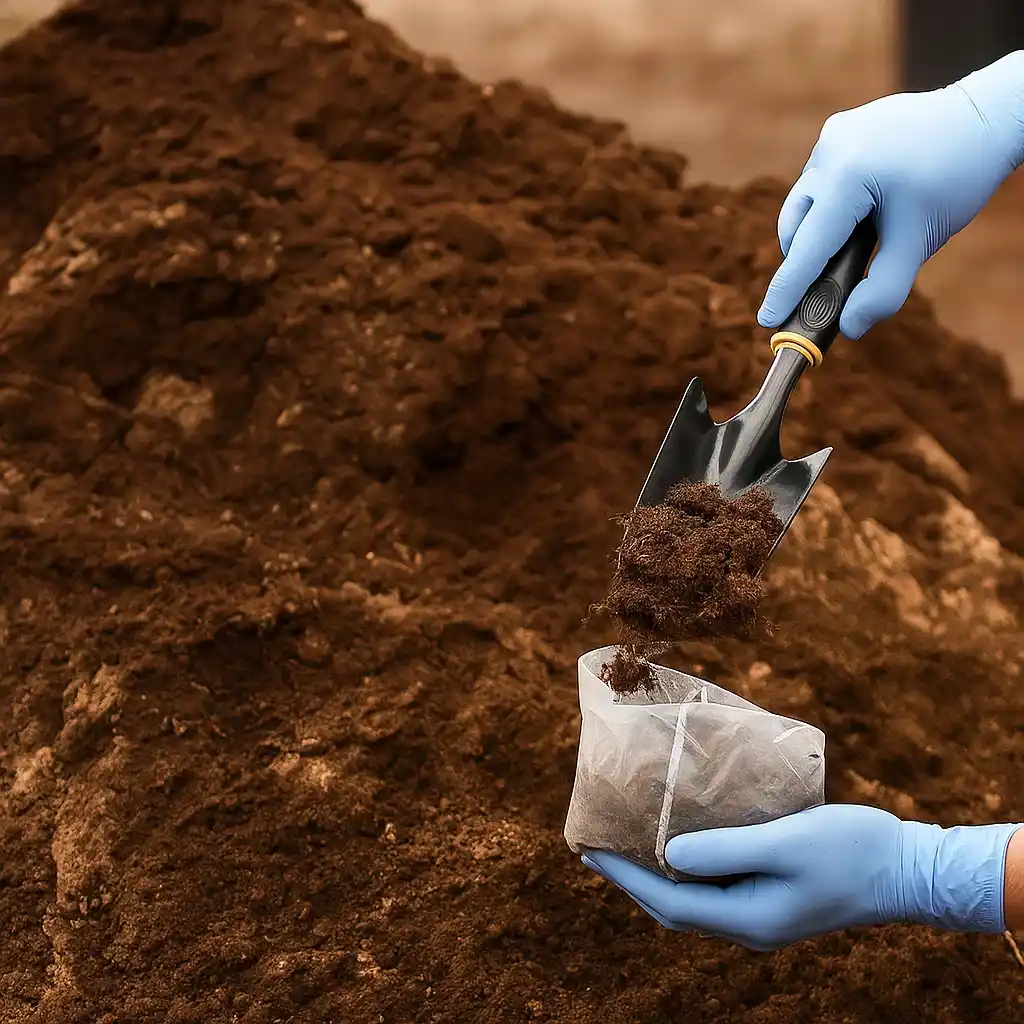
A Level 3 soil survey is the standard soil testing for septic systems required in Georgia. The certified classifier digs multiple test borings across your property – typically 3 to 5 holes at depths of 48 to 60 inches. Each boring is classified by USDA soil texture, color, and structure. The final report includes a scaled site map showing boring locations, soil boring logs with classification codes, depth to seasonal high water table, depth to rock or impervious layers, absorption rate data, and recommended locations for primary and replacement drainfields. This report is the foundation of your entire septic installation project.


Already have a soil test from another classifier? We can review your existing Level 3 report and use it for the permit application if it meets current DPH standards and is less than 12 months old. Call 404-694-3060 and we will tell you if it is usable.

How Long Does a Level 3 Survey Take

Field work takes 1 day. For properties under 3 acres, the classifier typically completes the report within 1 to 2 business days after the site visit. Larger or more complex properties with steep slopes or multiple soil types may take 3 to 5 days for the written report.

Level 3 vs Level 4 - When Is Level 4 Required

A Level 4 survey adds saturated hydraulic conductivity (Ksat) testing. Georgia requires it when Level 3 results show shallow bedrock within 24 inches, a high water table within 18 inches, or extremely tight clay below minimum absorption rates. In Fulton and DeKalb counties, heavy clay subsoil makes Level 4 surveys more common than the state average.
 

How Long Is a Soil Test Valid

A Georgia septic permit based on your soil evaluation is valid for 12 months from the date of issue. If the system is not installed within that window, the permit expires and you need a new application. Do not order soil testing for septic system work until your construction timeline is within 12 months of breaking ground.

Septic Permits by County - Metro Atlanta

Permit fees, turnaround times, and supplemental requirements vary across the 9 metro Atlanta counties we serve. Here is what to expect in each county.

Fulton County Septic Permit

Fulton County Environmental Health handles the highest volume of septic applications in metro Atlanta. Permit fees start around $750 and can exceed $1,000 for properties requiring additional review. Fulton regularly uses the full 20-day review window. Properties in South Fulton near Fairburn and Palmetto see heavier clay subsoil, which increases the chance of needing a Level 4 survey. If you are buying a home in Fulton County with a septic system, find out whether you need a septic inspection before closing – most lenders require one. If you need a septic tank repair in Fulton County, the permit requirements differ – contact us for specifics.

Gwinnett County Septic Permit

Gwinnett County environmental health processes permits efficiently but requires detailed site plans. Permit fees typically range from $300 to $600. Properties along the Chattahoochee corridor and in areas near Lawrenceville and Snellville often show mixed clay-loam soils. Review timeline averages 10 to 15 business days for complete applications.

Cobb County and DeKalb County

Cobb County and Douglas County share a public health district, meaning permit applications for both go through the same office. Cobb permit fees range from $200 to $500. Cobb’s red clay piedmont soil is consistent across most of the county. DeKalb County processes permits through its Board of Health with fees in the $300 to $600 range. Properties in Stone Mountain and Lithonia sit on granite substrata that can complicate boring depth. If you are dealing with a failing drainfield in either county, drainfield repair in metro Atlanta may require a new soil evaluation before the county approves a replacement design.

CountyTypical Permit FeeAverage Review TimeNotes
Fulton County$750 – $1,000+15 – 20 daysHighest fees in metro Atlanta
Gwinnett County$300 – $60010 – 15 daysDetailed site plan required
Cobb County$200 – $50010 – 15 daysShared district with Douglas
DeKalb County$300 – $60010 – 15 daysGranite substrata in east side
Forsyth County$200 – $4007 – 14 daysFast processing
Rockdale County$150 – $3005 – 10 daysFastest in metro
Douglas County$200 – $40010 – 15 daysShared district with Cobb
Clayton County$200 – $40010 – 15 daysModerate volume
Fayette County$150 – $3505 – 10 daysLower volume, fast review

What Is a Perc Test and Is It the Same as a Soil Survey

A percolation (perc) test measures how fast water drains through a specific hole in the ground. It gives you one number: the absorption rate in minutes per inch. A Level 3 soil survey is far more comprehensive. It evaluates soil texture, structure, color, depth to water table, depth to rock, and the suitability of the entire property for a septic system. In Georgia, a perc test alone is not enough to get a permit. The state requires a full Level 3 soil report prepared and signed by a DPH-certified soil classifier.

When Counties Require a Perc Test

 
Some metro Atlanta counties ask for perc test data as part of the Level 3 report, particularly when soil classification falls in a borderline range. Gwinnett County and Cobb County environmental health offices sometimes request supplemental percolation data when boring results show mixed textures. The perc test in these cases is a supplement to the Level 3 – not a replacement. Your soil classifier will know whether supplemental testing is needed.
 
Septic Tank Inspection CTA

What a Failing Perc Test Means for Your Project

 
If the soil does not percolate fast enough for a conventional gravity-fed drainfield, you still have options. Mound drainfields, aerobic treatment units (ATUs), and pressure-dosed systems are all permitted in Georgia for properties with poor-draining soil. These alternative systems cost more – typically $15,000 to $30,000 compared to $5,000 to $10,000 for conventional. If your property has already failed a perc test, our drainfield installation team can design an alternative system that meets county requirements. One early warning sign that soil drainage is already causing problems on an existing system is standing water pooling over the drainfield after rain.

Why Metro Atlanta Homeowners Choose Septic Tank Guru for Soil Testing

Brian was excellent to work with! He scheduled us quickly and did exactly what he said he was going to do. He was great explaining the process to repair and how to maintain it. Highly recommended and will be referring this company for my clients in the future. Professional and honest…which is what I was looking for!
- Dionne Walker

DPH-Certified Classifiers

Every soil evaluation is performed by a Georgia DPH-certified classifier. We know the soil conditions across all 9 metro Atlanta counties from years of field work.

We Handle the County

You never visit the health department. We prepare the application packet, submit it, and follow up during the 20-day review window.

Same-day written reports

Documented on-site, delivered before we leave your property.

Flat-rate pricing

What we quote is what you pay — no add-ons once the tank is open.

Honest assessments

If it's fine, we'll say so. We don't manufacture problems to sell repairs.

1-year warranty

Every repair we perform is backed by our 1-year warranty.

Service Areas - Soil Testing and Permits in Metro Atlanta

Septic Tank Guru provides soil testing for septic systems and permit management across all 9 metro Atlanta counties. Call 404-694-3060 to confirm we cover your address.


Fulton County

Sandy Springs · Atlanta · East Point · Fairburn · Alpharetta · Roswell

Septic Services in Fulton County

Cobb County

Marietta · Smyrna · Kennesaw · Acworth · Powder Springs · Austell

Septic Services in Cobb County

Gwinnett County

Lawrenceville · Lilburn · Snellville · Norcross · Buford · Loganville

Septic Services in Gwinnett County

DeKalb County

Decatur · Stone Mountain · Tucker · Lithonia · Clarkston · Avondale Estates

Douglas & Clayton

Douglasville · Lithia Springs · Jonesboro · Forest Park · Riverdale

Forsyth, Rockdale & Fayette

Cumming · Conyers · Fayetteville · Peachtree City · Tyrone

What Georgia Homeowners Say

Frequently Asked Questions - Soil Testing and Septic Permits

How long is a soil test valid for in Georgia?

A Georgia septic permit based on your soil evaluation is valid for 12 months from the date of issue. If the system is not installed and approved within that window, the permit expires. You will need a new application and likely a new soil evaluation. Plan your project timeline so construction starts within that year.


A failing perc test does not mean you cannot build. It means a conventional gravity-fed drainfield will not work on your property. Alternative systems like mound drainfields, aerobic treatment units, or pressure-dosed systems can handle poor-draining soil. Our team can walk you through the options after reviewing your soil report. If you notice standing water over your existing drainfield, that may also signal soil conditions that require an engineered replacement.


Yes. We manage everything from scheduling the soil evaluation to submitting the completed application packet to your county environmental health office. We coordinate the Level 3 soil report, prepare the site plan, and follow up with the county during the 20-day review window. You do not need to visit the county office. Call 404-694-3060 and we will walk you through the process for your county.


The total timeline from scheduling your soil test to receiving a permit is typically 2 to 6 weeks. Field work takes 1 day. The soil report is ready in 1 to 2 business days. County review takes up to 20 days by law. Busy counties like Fulton and Gwinnett sometimes use the full 20 days. Rural counties often respond in 5 to 10 days.


Only professionals certified by the Georgia DPH as Certified Soil Classifiers or Soil Scientists can perform the Level 3 soil evaluation required for a septic permit. These professionals must carry at least $1 million in liability insurance. A general contractor or septic installer cannot perform this evaluation. Septic Tank Guru coordinates directly with certified classifiers for all soil testing for septic system permitting.


Georgia does not require a perc test to sell a house. However, most lenders require a septic inspection before closing. If the inspection reveals a failing system, the buyer or seller may need a new soil evaluation to determine replacement options. Learn more about what a septic inspection covers during a home purchase in Georgia and how long the inspection process takes before scheduling.


Schedule Your Soil Test or Permit Consultation

DPH-certified classifiers. Full permit management. 9 metro Atlanta counties covered. Most permits in hand within 2 to 6 weeks.

Serving Fulton – Gwinnett – Cobb – DeKalb – Forsyth – Rockdale – Douglas – Clayton – Fayette Counties and all surrounding metro Atlanta communities.

Related Septic Services

Septic Tank Pumping 23 26

Septic System Engineering

Drainfield installation in progress at a residential site

Drainfield Installation

Septic tank installation work in progress at a residential property

Drainfield Repair