
Quick Answer
The most common drainfield failure signs in metro Atlanta are soggy ground over the field, slow drains in every fixture, sewage smell in the yard, and bright green grass strips over the leach lines.
If you see standing water or smell sewage near the drainfield, call today. Waiting even two weeks can turn a $1,500 repair into a $6,000 replacement.
Soggy yard. Sewage smell. Every drain in the house running slow at the same time. If that sounds like your week, your drainfield is probably failing.
Most homeowners across metro Atlanta see these drainfield failure signs for weeks before they call. By then a $2,000 partial line fix has turned into a full drainfield repair in Atlanta GA closer to $8,000. In 13 years of this work across Gwinnett, Cobb, DeKalb, and Forsyth counties, the pattern is always the same. The signs show up early. Here is what to watch for, and here is when to call 404-694-3060.
How do I know my drainfield is failing versus a simple clog?
A clog affects one fixture. A failing drainfield affects all of them.
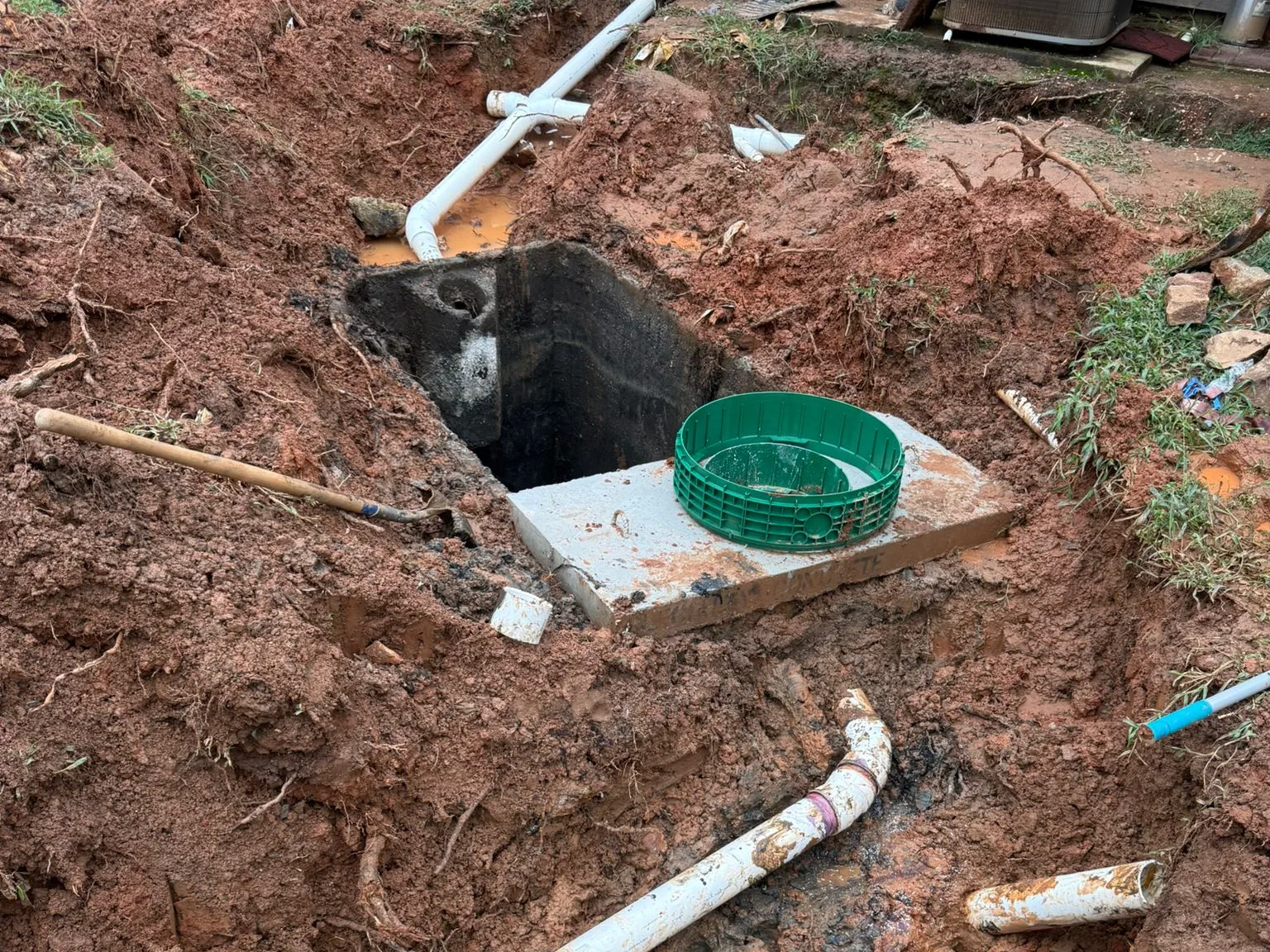
If your kitchen sink is slow but the toilets flush fine, that is probably a pipe clog. A plumber can clear it. If every drain in the house is slow, toilets gurgle when the washing machine runs, and the yard smells off, that points to the drainfield. We have seen this pattern hundreds of times in Gwinnett County homes built in the 1990s and 2000s.
The clearest drainfield failure sign is when all your drains slow down at the same time in Atlanta. The system has nowhere to push the water, so it backs up from the field to the tank to the house. If your toilet is gurgling when you flush, that is the system telling you the field cannot keep up.
A few weeks ago we ran a camera down a line in Snellville and found that the first 20 feet of the drainfield pipe was completely clogged with a black sludge called biomat. The homeowner had not pumped the 1,250-gallon tank in over seven years. Solids had been flowing into the field for years. By that point it was not a simple clog. It was drainfield failure.
Why does drainfield failure cause sewage to surface in the yard?
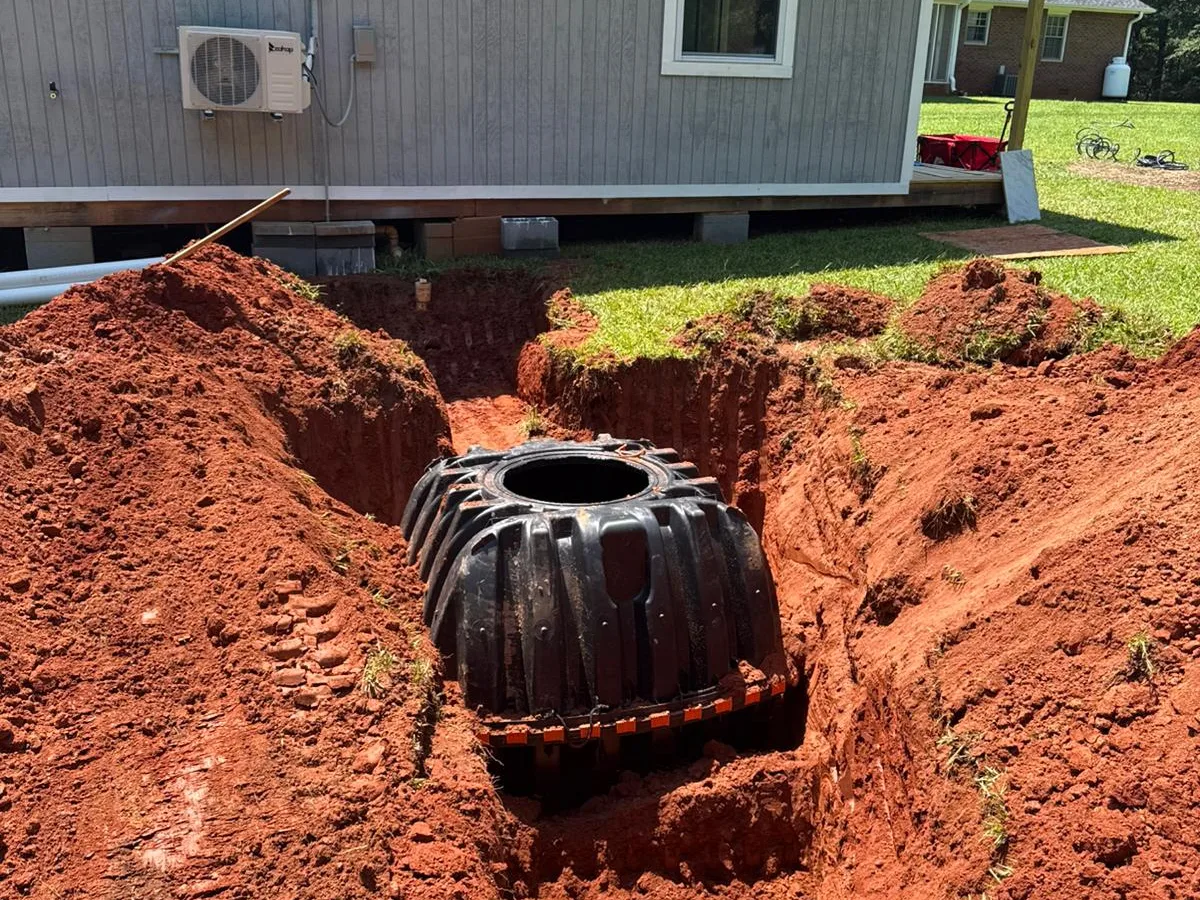
The drainfield is the last stop for wastewater. Water leaves the septic tank and flows into a network of perforated pipes buried in gravel trenches. From there it filters down through the soil.
When the soil around those pipes gets clogged, water has nowhere to go. It rises to the surface. That is why you see soggy patches, standing water, or actual sewage pooling over the field.
In metro Atlanta, this happens faster because of the clay soil. According to the Georgia Department of Public Health, all new drainfield installations in the state require a soil evaluation for this reason. Clay holds water much longer than sandy soil. In the 30045 and 30046 zip codes around Lawrenceville, we see drainfield failure signs after wet springs more than any other time of year.
If you notice standing water over your drainfield in Atlanta, that is not a drainage issue. That is the field telling you it is done absorbing water.
See soggy ground over your drainfield? Call us now.
We serve Gwinnett County and all of metro Atlanta. We can usually get out the same day.
Does heavy clay soil in Georgia speed up drainfield failure?
Yes. Red clay is the biggest factor in drainfield failures across metro Atlanta.
North of Atlanta, Gwinnett and Forsyth counties sit on some of the heaviest clay in the state. That clay drains poorly on a good day. After a wet spring, like the ones we get every March through May, the soil stays saturated for weeks. The drainfield cannot push water through soil that is already full.
In 13 years of drainfield repair in Atlanta GA, we have seen fields in Gwinnett County fail years earlier than fields in Fayette County where the soil is a mix of clay and sandy loam. Same size system. Same household. The difference is the dirt.
A lot of homes near Marietta were built in the 1970s and 1980s. The original drainfields were designed for smaller families using far less water than people use today. A family of 4 pushes about 400 gallons of water per day through the septic system, according to the EPA. Combine that with clay soil, and you get drainfield failure signs showing up between years 15 and 25.
If you smell sewage in your yard near the septic tank in Atlanta, the field is likely part of the problem. The smell means wastewater is sitting at or near the surface instead of filtering through the soil.
What is the difference between a saturated drainfield and a clogged one?
A saturated field is drowning. A clogged field is blocked. The fix is different for each one.
Saturation happens when the soil is too wet to absorb any more water. This is common after heavy rain in Atlanta, especially in the 30043 and 30044 zip codes around Lawrenceville and Lilburn. A saturated field can sometimes recover on its own once the rain stops and the soil dries. That usually takes 48 to 72 hours.
A clogged drainfield is a different problem. Biomat, a thick black sludge made of bacteria and waste, builds up in the soil around the drain pipes over time. Once that layer gets thick enough, water cannot pass through. No amount of dry weather will fix it.
Here is how to tell the difference. If the soggy spot appeared right after days of rain and clears up within a week, that is saturation. If the soggy spot showed up and never went away, that is a clog. That means the drainfield is failing, and it will only get worse.
In the 200+ drainfield jobs we have done across Gwinnett and Cobb counties, the clogged fields almost always trace back to the same cause. The homeowner went too long without pumping the tank. The EPA recommends pumping every 3 to 5 years. In Atlanta, we see failures more commonly in systems pumped every 5 to 7 years because the clay soil gives the drainfield less recovery time. How often you pump in Atlanta makes a real difference in how long your drainfield lasts.
Not sure if your drainfield is clogged or saturated? We can tell you.
We serve Cobb, Gwinnett, DeKalb, and Forsyth counties. Call for same-day diagnosis.
Can I use my septic system while the drainfield is failing?
You can, but you need to cut back hard on water use.
Every gallon you send down the drain puts more pressure on a drainfield that is already struggling. Do not run the dishwasher and the washing machine at the same time. Spread laundry out over the week. Take shorter showers. Fix any leaking faucets or running toilets immediately.
If sewage is backing up into the house or surfacing in the yard, stop all water use and call us at 404-694-3060. That is not a “wait and see” situation. According to the Georgia Department of Public Health, a failing septic system can result in a county health department order to cease use until it is repaired. In the 30082 and 30068 zip codes near Smyrna, we have seen health department citations issued within days of a sewage surfacing complaint.
A septic inspection in Atlanta GA can confirm whether the drainfield is the problem before you spend money on the wrong fix. Our inspection starts at $475 and tells us exactly what is going on underground.
How quickly does a failing drainfield get worse if ignored in metro Atlanta?
Fast. A small drainfield repair left unaddressed for 30 days typically doubles in cost.
What starts as a single clogged line at $1,500 can become a full field failure at $6,000 to $15,000 within a month or two. The biomat keeps building. The soil keeps clogging. The system keeps pushing sewage toward the surface.
We have pulled up drainfields in Stone Mountain and Tucker that were 30 to 40 years old and never serviced. Most of the systems we service in DeKalb County were installed in the 1960s and 1970s. They were designed for fewer people using far less water than today’s households. That mismatch is why we get so many drainfield failure signs calls from Sandy Springs and the surrounding areas.
If you are buying a home and the inspection reveals drainfield problems, see what happens when a septic system fails inspection during a home sale in metro Atlanta. The cost of delay goes up fast in those situations too.
The bottom line: if you see drainfield failure signs, the clock is running. A full breakdown of drainfield repair cost across metro Atlanta shows exactly what each level of repair runs. The earlier you call, the lower that number stays.
When should I call right away about drainfield failure signs?
Call today if you see any of these:
- Sewage smell in the yard that does not go away after rain dries
- Standing water or soggy ground over the drainfield with no recent rain
- Sewage or dark water surfacing in the yard
- All drains in the house are slow at the same time
These can wait a few days, but not more than a week:
- A strip of bright green grass over the drainfield lines
- Occasional gurgling in toilets when laundry runs
If the drainfield failure signs point to an active backup, emergency septic pumping in Atlanta GA can relieve the pressure while we figure out the full picture. If you are not sure whether your situation is an emergency, call us at 404-694-3060 and describe what you see. We will tell you straight.
In many cases, the first step is a septic inspection in metro Atlanta to confirm whether the drainfield is failing or if the problem is somewhere else in the system. An inspection starts at $475 and takes 2 to 4 hours. That one visit can save you thousands by catching the problem before it spreads.
If your tank has not been pumped in a few years, that is usually where drainfield problems start. Septic tank pumping in Atlanta GA starts at $575 and clears the tank so solids stop flowing into the field. Many drainfield failure signs trace back to a tank that has gone too long without service.
Frequently asked questions about drainfield failure signs
What is the most common drainfield failure sign in metro Atlanta?
Soggy ground over the drainfield area, even when it has not rained, is the most common sign we see across Gwinnett, Cobb, and DeKalb counties. The red clay soil holds water longer, so the wet spot shows up sooner than it would in sandy soil. If you see this, call drainfield repair in Atlanta GA before it gets worse.
How much does it cost to fix a failing drainfield in metro Atlanta?
Drainfield repair in metro Atlanta runs $1,500 to $4,000 for a partial line replacement. Full drainfield replacement runs $6,000 to $15,000. In our experience, homes in Gwinnett County on red clay often land at the higher end because engineered fill is required. See the full drainfield repair cost breakdown for metro Atlanta.
Can a drainfield recover on its own after heavy rain in Atlanta?
A healthy drainfield can recover after rain dries up, usually within 48 to 72 hours. A failing drainfield stays wet long after the rain stops. If the soggy spot lasts more than a week with no new rain, that is a drainfield failure sign, not a weather issue. Call septic inspection in Atlanta GA to find out for sure.
Does green grass over the drainfield always mean failure?
Not always, but it is a warning worth checking. A strip of bright green grass means sewage is feeding the roots instead of filtering through the soil. If the green grass appears with a soggy feel underfoot or a sewage smell, that is a drainfield failure sign. An inspection in metro Atlanta starting at $475 can confirm whether the field is failing.
Should I stop using water if my drainfield is failing?
Cut water use as much as possible. Spread laundry over several days. Take shorter showers. Do not run the dishwasher and washing machine at the same time. Every gallon puts more pressure on a failing field. If sewage is surfacing, stop all use and call 404-694-3060 for emergency septic pumping in Atlanta.
How long does a drainfield last in metro Atlanta before it fails?
A well-maintained drainfield lasts 20 to 30 years. In our experience across DeKalb and Cobb counties, most failures happen between years 15 and 25. Clay soil, skipped pumpings, and high water use all shorten that window. Regular septic maintenance in Atlanta is the best way to reach the 30 year mark.
Which areas do we cover for drainfield repair?
We cover all of metro Atlanta for drainfield repair and drainfield failure diagnosis. In Gwinnett County, we serve Lilburn, Snellville, and Lawrenceville. In Cobb County we cover Marietta, Smyrna, Kennesaw, and Acworth. In DeKalb County we serve Stone Mountain, Tucker, and Decatur. In Fulton County we cover Sandy Springs and Fairburn. Call 404-694-3060 and we can usually schedule same-day or next-day service.
We have seen this before. We can help.
Serving Gwinnett, Cobb, DeKalb, and Forsyth counties. Same-day visits available.