
Quick Answer
Standing water over your drainfield in Atlanta is most commonly caused by saturated clay soil after heavy rain, a failing drainfield with biomat buildup, a full septic tank pushing solids into the field, or crushed pipes from vehicle traffic or root intrusion.
If the water smells like sewage, your drains are slow inside the house, or the wet patch has been there for more than two days without rain, call us today. That is a drainfield failure, not just wet weather.
That soggy patch over the leach field is one of the calls we get most. It shows up a lot in Gwinnett County and Forsyth County after the spring rains. Red clay soil does not drain the way sandy loam does. When it gets fully saturated, standing water over the drainfield can stay for days. Sometimes it is just the weather. Sometimes it is the field giving up. Our drainfield repair service in Atlanta handles both, and knowing which situation you are in makes a big difference in cost. Browse our blog for related symptoms and cost guides across all our services.
Is water pooling over the drainfield always a sign of failure?
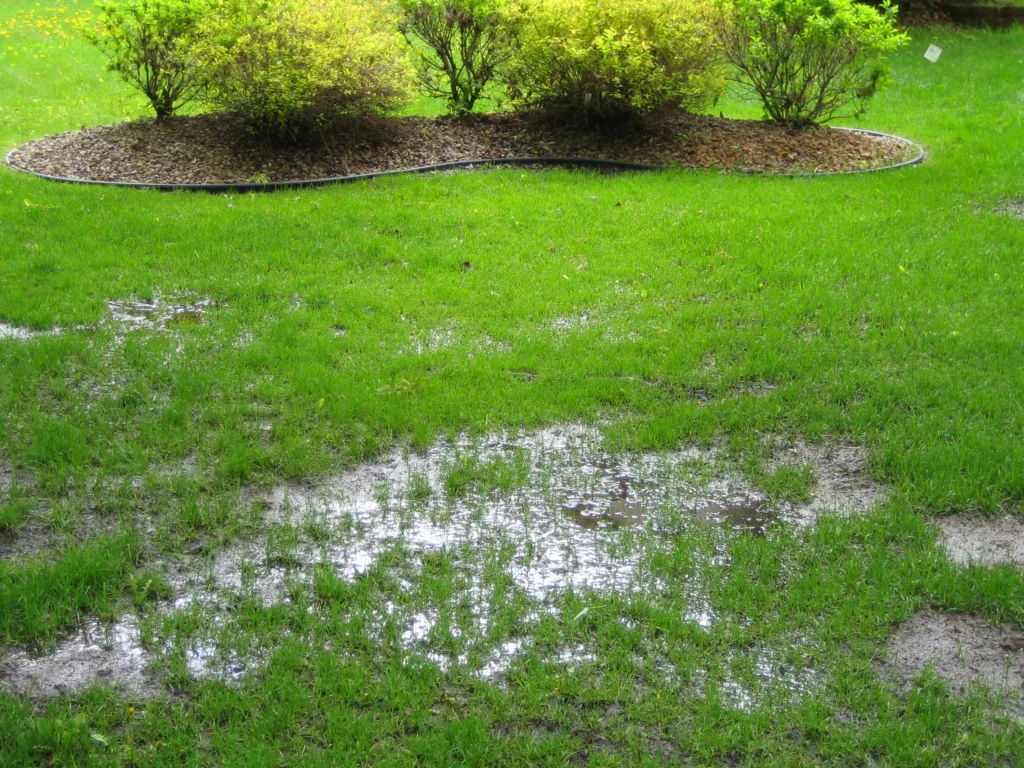
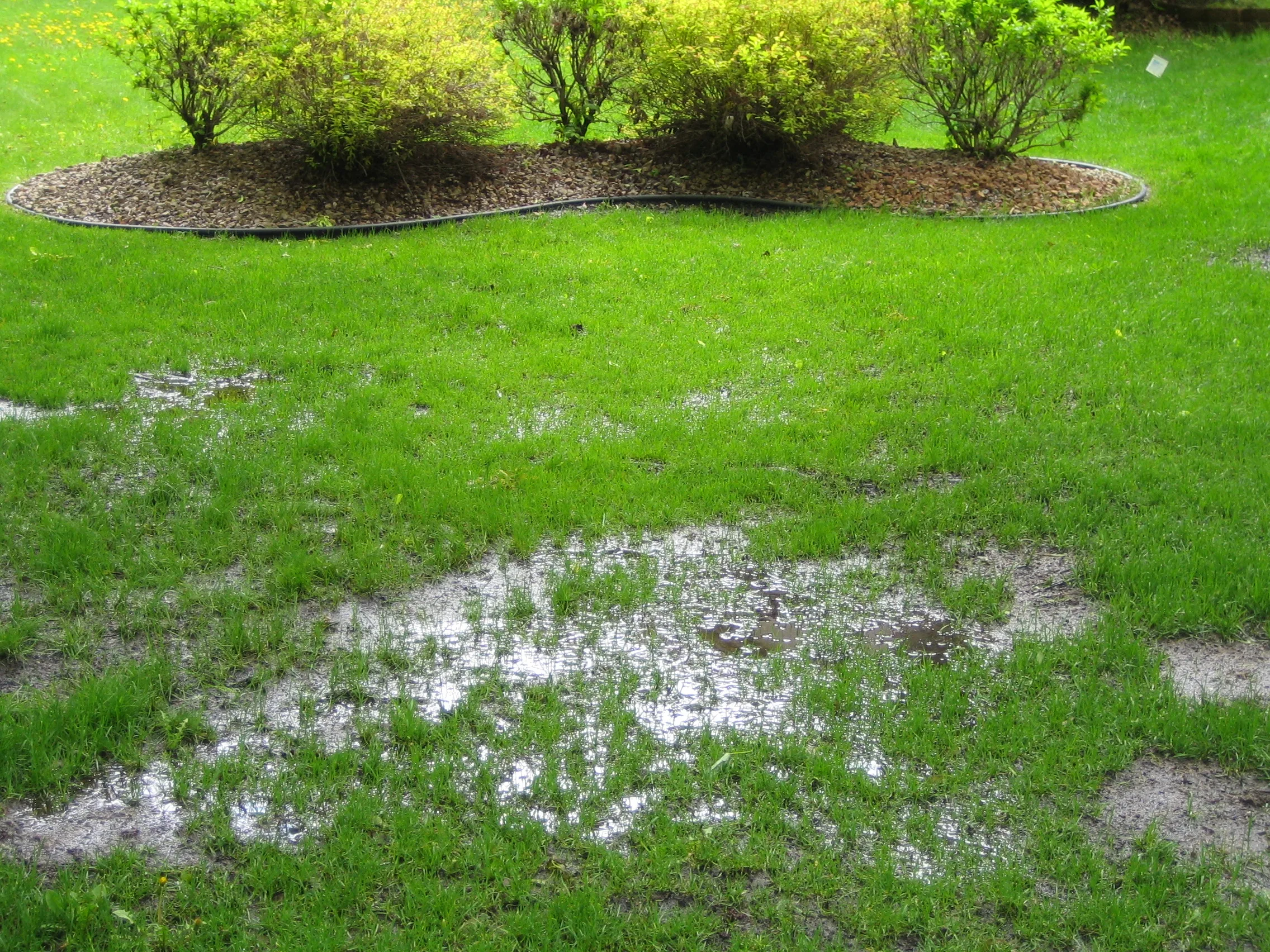
No, but it is always worth checking. Pooling that appears only during a multi-day storm and dries up within 48 hours of the rain stopping is usually temporary saturation. The clay soil in counties like Gwinnett and Forsyth is especially slow to drain. After three or more days of rain, we start getting calls from homeowners in Lilburn and Cumming who see soggy spots they have never seen before. Many of those systems are fine once the ground dries out.
The ones that are not fine are easy to spot. If the standing water over the drainfield Atlanta homeowners see stays wet for more than two days after rain stops, or if it appears on dry days with no recent rain at all, that is a sign the field is struggling to absorb effluent. That is a different problem entirely and needs a professional look before it gets worse.
A small, localized soft spot is one thing. A large area that smells and will not dry up is another. Our septic inspection service in Atlanta can tell you which one you are dealing with in a single visit, typically two to four hours on site.
What causes a drainfield to become saturated in Georgia?
The number one cause we see in North Atlanta is the soil itself. Gwinnett and Forsyth counties sit on heavy red clay. Clay soil absorbs water slowly. When a drainfield is working correctly, effluent trickles into the soil and disperses underground. When the clay gets waterlogged, that process stops. The effluent has nowhere to go and rises toward the surface.
Beyond the weather, there are a few mechanical causes we find regularly. The most common is biomat buildup. Every drainfield develops a layer of organic material in the trench walls over time. In a healthy system, aerobic bacteria keep it from getting out of control. When the system gets overloaded, the biomat thickens and starts blocking absorption. That is when standing water over the drainfield in Atlanta starts appearing on dry days, not just after rain.
A full septic tank is another driver. When the tank has not been pumped on schedule – the EPA recommends every 3 to 5 years – solids escape into the drainfield lines and clog them from the inside. In Atlanta we recommend pumping every 3 to 4 years because the clay soil gives the field less recovery time between loads. A lot of the systems we service in Cobb County were installed in the 1970s and have never been pumped on a proper schedule. Our guide on how often to pump a septic tank in Atlanta explains how to get back on track. That mismatch catches up with you.
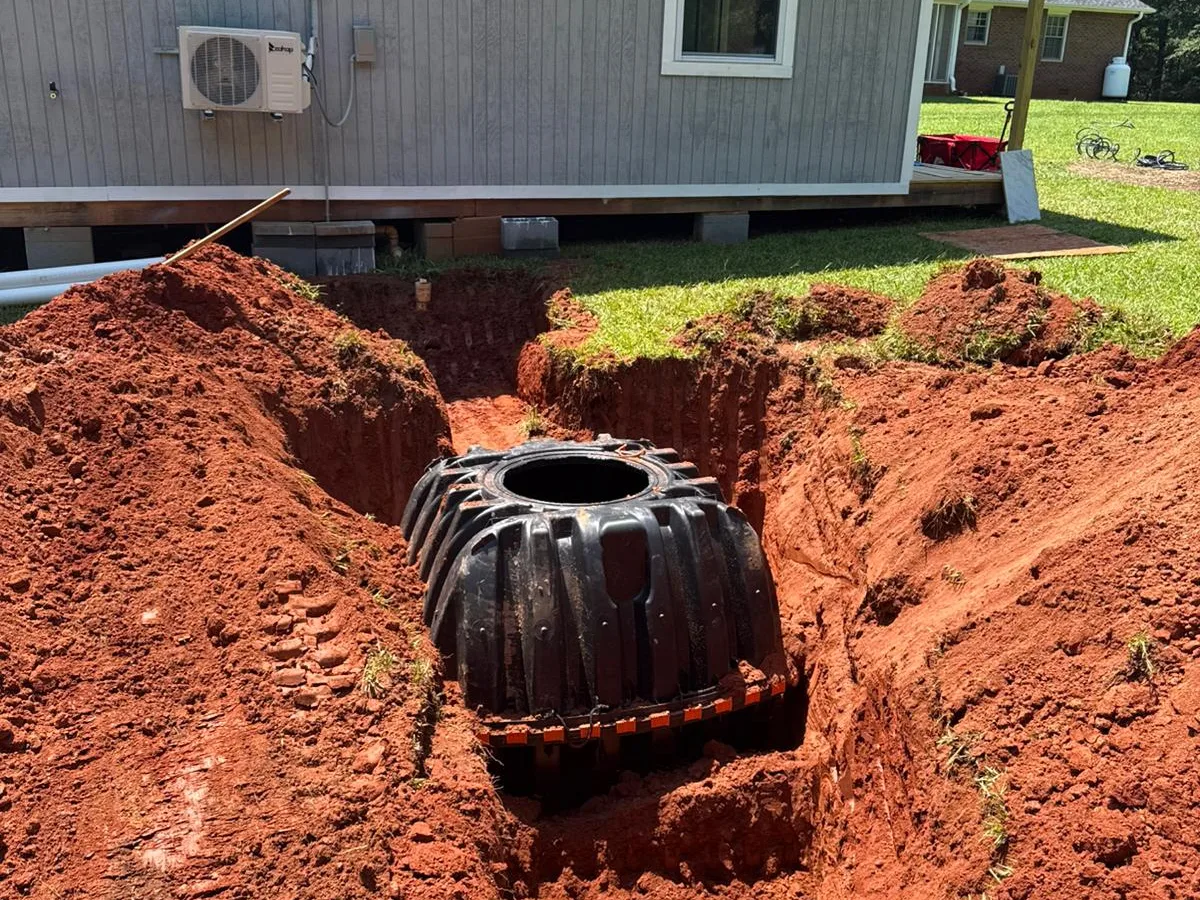
Root intrusion and crushed pipes round out the list. Large trees planted near the drainfield can push roots into the lines within 5 to 10 years. Heavy equipment or vehicles driving over the field can collapse the perforated pipes. Either situation stops effluent from spreading across the field and forces it to pool in one spot. Our septic tank repair team runs camera inspections on the lines to identify the exact location before any digging starts.
See standing water over your field? Call us now.
We serve Gwinnett, Forsyth, and Cobb counties. We can usually get out the same day.
Can heavy rain cause soggy spots over my leach field?
Yes. This is probably the most common call we get between March and May in Atlanta. The spring rain season here is serious. Three or four inches over a weekend is not unusual. When that much water falls on red clay in Gwinnett or Forsyth, the entire soil profile gets saturated, not just around the drainfield. The field cannot push effluent out into ground that is already full of water, so the effluent rises to the surface instead.
Here is what we tell homeowners: if the wet spot appeared during the storm and dries up within 48 hours of the rain stopping, your system is probably fine. Watch it over the next week. If it comes back on the next dry day, or if it does not dry up after two days, call us. That pattern means the field was already struggling and the rain exposed it.
After any multi-day rain event in Atlanta, we see a wave of standing water over drainfield calls within 24 to 48 hours. Most of those end up being temporary saturation. A smaller number turn into real repair jobs. The ones that turn into repairs almost always had a warning sign before the rain. Slow drains. A toilet that gurgles. A damp spot that appeared briefly a few months earlier. If any of those sound familiar, do not wait for another storm to make it worse.
Homes in Marietta and Smyrna on Cobb County’s 1970s-era systems see this pattern regularly. Those original systems were designed for smaller households using less water. A modern family of four uses roughly 400 gallons per day through the septic system. That is more than the original design assumed, and the clay soil makes the margin even tighter.
How do I tell if surface water is sewage or just rainwater?
Smell it from a distance. Sewage has a sulfur or rotten odor that is hard to miss. Clear water with no smell is almost always surface runoff or groundwater from a high water table. Dark gray or brown discoloration in the wet area is a second indicator. Sewage effluent carries solids and bacteria that discolor the soil and the water around it.
The location matters too. Rainwater pools in the low spots in your yard. Effluent typically surfaces directly over the drainfield lines, which run in a pattern away from the tank. If the wet area follows a straight line or a specific zone rather than just the lowest ground in your yard, the water is likely coming from the field, not from the sky.
Check inside the house at the same time. Flush a toilet. Run a sink. If your drains are slow or you hear gurgling while water is pooling outside, your system is backed up. That means the effluent has nowhere to go and is surfacing. That is a same-day call, not a wait-and-see situation. Our full septic inspection with camera starts at $700 and will pinpoint the exact source and cause in one visit.
According to the Georgia DPH on-site sewage program, a septic system with surfacing effluent should be taken out of service until it is repaired. If you confirm it is sewage, stop using water in the house as much as possible and call a licensed septic contractor the same day.
Is it dangerous for kids and pets to be near a wet drainfield?
If the water contains sewage effluent, yes. Untreated wastewater carries bacteria, viruses, and parasites. Children who play in a wet yard and do not wash their hands, or pets that drink from puddles, can get sick from contact with it. The risk is real, not theoretical.
Keep people and animals away from the wet area until you know what you are dealing with. If you can smell the water or if it looks gray or brown, treat it as sewage. Put up a barrier, a section of fence or some stakes and twine, to keep the area off limits until a technician can evaluate it.
If you are on a private well, the risk is even more serious. Septic effluent can move through the soil and reach a well within a relatively short distance. Georgia setback rules require a minimum separation between a drainfield and a well, but older systems installed before current code may not meet those standards. If you have standing water over a drainfield AND a private well on the same property, call us the same day. Our drainfield repair team in Atlanta handles both the diagnosis and the fix.
This is fixable. Call us today.
We cover all of metro Atlanta including Gwinnett, Cobb, and Forsyth counties. Same-day service is available.
Do I need a full drainfield replacement or just a repair?
Most homeowners assume the worst when they see standing water over drainfield areas on their Atlanta property. The reality is that many cases do not need full replacement. Here is how we think about it.
Partial repairs are possible when only one section of the field has failed, when the problem is a clogged distribution box rather than the field itself, or when the saturation was caused by a temporary overload. Partial drainfield repair in Atlanta runs $1,500 to $4,000 depending on how many lines are affected and how saturated the soil has become. A clogged distribution box replacement is $500 to $1,200. That is a much smaller number than a full replacement.
Full drainfield replacement is needed when the biomat has spread through the entire field, when the perforated pipes have collapsed across multiple zones, or when the soil structure has broken down to the point where it can no longer absorb effluent even after rest. Full replacement in Atlanta runs $6,000 to $15,000. Homes in Gwinnett County on red clay often land at the higher end because engineered fill is required to create adequate drainage in the new field.
We have been to this call hundreds of times. The most reliable way to know which situation you are in is a camera inspection of the lines and an assessment of the distribution box and tank condition. We do not quote a replacement before we know what is actually broken. If a repair will fix it, that is what we recommend. Our drainfield repair service in Atlanta covers both partial repairs and full replacements, and we give you a written estimate before any work starts.
A small repair left unaddressed for 30 days typically doubles in cost. What starts as a $1,800 line repair becomes a $4,000 or $5,000 job within a month. We have seen it happen in Acworth and Kennesaw more times than we can count. The wet spot in the yard gets ignored until the drains back up inside the house, and by then the whole field has failed.
When should I call right away for standing water over my drainfield?
Some situations need same-day attention. Others can wait a day or two while you monitor. Here is how to tell the difference.
Call us today if any of these are true:
- The wet area has a sewage smell. That is effluent surfacing, and it is a Georgia DPH violation if not addressed.
- Your drains inside the house are slow or gurgling at the same time.
- The wet patch appeared on a dry day with no rain in the last 48 hours.
- The water is gray or brown in color.
- You have a private well on the same property.
You can monitor for 24 to 48 hours if these apply instead:
- The wet spot appeared during or immediately after a multi-day rain event.
- The water is clear and odorless.
- Your drains are running normally inside the house.
- The wet area is small and in a spot that typically collects runoff.
Even in the second category, if the wet spot does not dry up within two days of the rain stopping, call us. That pattern means the field was already compromised before the rain hit. Our Atlanta drainfield repair team can be out the same day in most cases. We service Cobb County, Fulton County, and all nine metro Atlanta counties.
If you are in Marietta or Acworth and your yard showed standing water near the septic area after last week’s rains, give us a call today. A quick pump and inspection often catches the issue before it becomes a full repair. Pumping in Atlanta starts at $575. An inspection starts at $475. That is a much better outcome than a $6,000 to $15,000 field replacement.
Frequently asked questions about standing water over drainfield Atlanta
Is water pooling over the drainfield always a sign of failure?
Not always. Pooling that appears only during heavy rain and clears within 48 hours is usually temporary saturation in Georgia’s clay soil. But if the standing water stays for more than two days without rain, or if you smell sewage near the wet area, that points to a failing drainfield. Schedule a septic inspection in Atlanta before the next storm hits.
What causes a drainfield to become saturated in Georgia?
The red clay soil in Gwinnett and Forsyth counties drains poorly. When the clay gets waterlogged after multi-day rain, effluent has nowhere to go and rises to the surface. Older systems in Cobb County designed for smaller households also get overwhelmed because modern families use 40 to 50 percent more water per day than systems built in the 1970s were designed to handle.
Can heavy rain cause soggy spots over my leach field?
Yes. After three or more days of rain in Atlanta, we see soggy yard calls come in within 48 hours. The drainfield soil becomes fully saturated and the system cannot push effluent out. If the wetness clears in a day or two once the rain stops, the field is likely fine. If it stays wet, call us for a drainfield inspection and repair quote.
How do I tell if surface water is sewage or just rainwater?
Sewage smells. A sulfur or rotten odor near the wet area confirms the water contains effluent. Clear, odorless water is likely surface runoff. Dark gray or brown discoloration also signals sewage. If you smell anything, keep kids and pets away and call a licensed septic repair company in Atlanta the same day.
Is it dangerous for kids and pets to be near a wet drainfield?
Yes, if the water contains sewage effluent. Untreated wastewater carries bacteria and pathogens. According to the Georgia DPH on-site sewage program, a system with surfacing effluent should be taken out of service until repaired. Keep children and animals off the area until a technician confirms what the water contains.
Do I need a full drainfield replacement or just a repair?
It depends on what we find. Partial saturation from rain usually does not require replacement. A clogged or partially failed section can often be repaired for $1,500 to $4,000. Full drainfield replacement in Atlanta runs $6,000 to $15,000 and is needed when the biomat has spread through the whole field or the pipes have collapsed. One inspection visit tells us which situation you are in.
How long does drainfield repair take in Atlanta?
Most partial drainfield repairs are complete in one to three days. Full drainfield replacement takes three to seven days including excavation. The permit process through your county health department adds 10 to 30 business days if a new field is required. We handle the permit process and walk you through every step.
Which areas do we cover for drainfield repair?
We cover all of metro Atlanta. For standing water over drainfield issues in Cobb County, we serve Marietta, Smyrna, Kennesaw, and Acworth. In Fulton County we cover Sandy Springs, Buckhead, Fairburn, and East Point. We also service Gwinnett, Forsyth, DeKalb, Rockdale, Clayton, Douglas, and Fayette counties. Call 404-694-3060 and we can usually schedule same-day or next-day service.
We have seen this before. We can help.
Serving Gwinnett, Cobb, Forsyth, and all of metro Atlanta. Call today for a same-day drainfield inspection.