
Quick Answer
A sewage smell near the septic tank in your yard is most often caused by a tank that needs pumping, a cracked or loose lid letting gases escape, a blocked vent stack, or a drainfield that is saturated or failing.
If the smell is strong, constant, or comes with soggy ground near the drainfield, call today. Those signs together mean the problem is active and getting worse.
That smell hit you when you walked outside this morning. It could be faint or it could knock you back. Either way, it is not normal and it should not be ignored. A septic tank repair is often straightforward when you catch it early. Wait a month and a $500 lid fix can turn into a $3,000 line repair. We have seen it hundreds of times in Atlanta, and the pattern is always the same: the smell starts small and the homeowner hopes it goes away. It does not go away on its own.
What causes sewage odor near the septic tank?
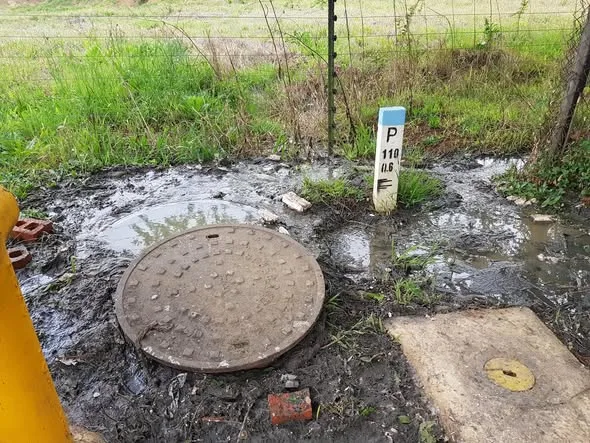
The smell is sewer gas. Specifically hydrogen sulfide, which the bacteria in your tank produce as they break down waste. Under normal conditions, that gas moves up through your home’s vent stack and exits above the roofline. When it ends up in your yard instead, something has broken that path.
We get this call regularly from homeowners in Cobb County. Most of the time it is one of four things: a tank overdue for pumping, a cracked or loose lid, a blocked roof vent, or a drainfield that is struggling. We can usually tell which one it is before we even open the ground, based on where the smell is strongest and what the yard looks like.
A full tank is the most common cause we find. When sludge builds up high enough, there is no room for gases to stay contained. They push out through whatever gap is available. Our septic tank pumping service starts at $575 and often stops the odor the same day. If you cannot remember your last pump, that is probably your answer, and our guide on how often to pump a septic tank in Atlanta can help you figure out if you are overdue.
Blocked vents are sneaky. The smell seems to come from the tank area, but the real problem is up on the roof. Leaves, bird nests, or debris block the vent pipe, pressure builds, and gases find the path of least resistance. Sometimes that path is out through the tank lids or soil near the system.
Smell sewage in your yard? Call us now.
We serve Cobb County, Fulton County, and all of metro Atlanta. We can usually get out the same day.
Is sewage smell in my yard a sign of drainfield failure?
It can be, but it is not always the case. Here is how we tell the difference when we arrive.
If the smell is concentrated near the tank lid and the ground around the drainfield is dry and firm, the problem is almost always the tank itself. A cracked lid, a full tank, or a broken inlet baffle. Our septic inspection service starts at $475 and tells us exactly which component has failed.
If the smell is strongest over the drainfield area, and the ground is soft, spongy, or wet, that is a different situation. That means wastewater is surfacing instead of absorbing into the soil. In Gwinnett County we see this a lot from late March through May, when red clay holds rainfall and gives the drainfield nowhere to push liquid. A drainfield repair in Atlanta runs $1,500 to $4,000 for a partial fix. A full replacement starts at $6,000. The difference between those two outcomes is usually how long the homeowner waited to call.
The worst-case scenario is both things happening at once: a full tank that has been pushing solids into the drainfield for months. Solids clog the field lines. The field stops absorbing. Odors come up through the soil. We have pulled up systems in Marietta and Smyrna where this went on for two-plus years. By then it is a full replacement conversation, not a repair.
How far should I smell the septic tank from my house?
You should not smell it at all from your porch, patio, or anywhere near your home. A brief, faint odor right at the tank access lid during a pump-out is normal. Everything else is not.
If you can smell the sewage smell near the septic tank from more than a few feet away, gases are escaping where they should not be. That is a condition worth diagnosing. It is not something that gets better on its own, and it is not something to get used to.
There are a couple of natural factors that can make a small smell seem bigger: wind direction, temperature inversions in the evening, and air pressure drops before a storm. These conditions push sewer gas lower to the ground instead of letting it disperse. So you might smell it more on some days than others. That variation does not mean the problem is minor. It means the underlying cause is always there, and weather is just affecting whether you notice it on a given day.
If Sandy Springs or Buckhead neighbors of yours mention the same thing, that can sometimes trace back to a shared drainage pattern. But when it is your yard and your tank, the cause is almost always in your system.
Does rain make septic odors worse in Georgia clay soil?
Yes, and we see this every spring. It is one of the most predictable patterns in Atlanta septic work.
After two or three days of heavy rain, the red clay in Gwinnett and Forsyth Counties becomes saturated. The drainfield soil cannot absorb any more liquid. When the tank pushes effluent out, it has nowhere to go. Gases that would normally disperse underground start venting up through the soil surface instead. The sewage smell near the septic tank intensifies and often spreads across the yard.
We start getting calls within 48 hours of any multi-day rain event. Homeowners in Lilburn, Snellville, and Cumming notice it first because Gwinnett and Forsyth County clay holds moisture longer than the sandy soils south of Atlanta. The Georgia DPH on-site sewage program documents how soil type directly affects drainfield performance, which is why soil evaluation is required before any new system is installed.
If rain reliably triggers the smell, that is a sign your drainfield is already under stress. It means the field is working at its limit even in dry conditions. When rain saturates the soil, it pushes the system past that limit. Do not wait for it to become a year-round problem. Our drainfield repair team can assess whether you need a partial line replacement or a full evaluation before the next wet season.
This is fixable. Call us today.
We serve Gwinnett County, Forsyth County, and surrounding areas. Same-day visits available.
Can a cracked septic tank lid cause yard odors?
Yes. This is more common than most homeowners expect, and it is one of the easier fixes when it is caught early.
A lot of the homes in DeKalb and Cobb County were built in the 1960s and 1970s. The original concrete tank lids are 50-plus years old now. Concrete cracks. Covers shift. Risers lose their seals. Any gap is enough for sewer gas to escape directly into the yard around the tank.
A lid replacement runs $300 to $800 depending on size and whether we are swapping concrete for plastic. Some homeowners in Acworth and Kennesaw have had us out, found a cracked lid, replaced it on the spot, and the smell was gone by the time we left. Same-day fix.
The trickier situation is when the lid looks intact but the riser seal has deteriorated. That is something we check during every inspection. A deteriorated riser seal is not visible from the surface. But it lets just as much gas out as a visible crack. If your home is on an older system and the sewage smell near the septic tank showed up recently without any other symptoms, a cracked lid or failed riser seal is worth investigating first. It is the cheapest possible fix and it rules out the more serious causes.
While you are checking the lid area, look for any soil subsidence around the tank. Sinking or uneven ground near the tank can indicate a cracked tank body, not just a cracked lid. That is a more serious repair, running $1,800 to $5,500, but it is still manageable when caught before failure. For older Fulton County systems, we find this situation several times a month.
Should I be worried if the sewage smell comes and goes?
An intermittent smell feels less urgent than a constant one. It is still a problem worth diagnosing.
When a smell appears and disappears, it is usually pressure-driven. Wind direction changes move the gas plume. Barometric pressure drops before storms push gas lower to the ground. Rain saturates the soil temporarily and then it drains. These conditions explain the variation, but they do not explain the source.
What we typically find is that an intermittent sewage smell near the septic tank is an early-stage problem. The tank is getting full but not overflowing yet. The drainfield is stressed but not failing yet. The lid is cracked but small enough that only certain weather conditions force enough gas through to notice.
The pattern we see consistently: an intermittent smell ignored for three to six months becomes a constant smell. At that point the underlying cause has progressed. What could have been a pump-out and lid replacement at under $1,400 combined becomes a repair conversation starting at $1,800. A small repair left 30 days past when it should have been addressed typically doubles in cost.
If your smell comes and goes, check two things. Have you had the tank pumped in the last three years? Is the smell stronger after rain or during warmer weather? Those two data points tell us a lot before we even arrive. Our East Point and Atlanta customers often describe this exact pattern. Call when it is still intermittent. Catching it early is always cheaper.
When should you call a septic company right away?
Call us today if you notice any of these:
- Sewage smell inside the house, especially near drains or toilets. Gas inside means the system is backing up, not just leaking outside.
- Soft, wet, or spongy ground over the drainfield. That is effluent surfacing. It will not drain on its own.
- Multiple slow drains combined with the outdoor smell. That pattern means the tank or a line is blocked. Our septic repair team can diagnose it in one visit.
- Standing water near the tank after a dry period. No rain plus wet ground near the tank means a leak, not saturation.
You can wait 1 to 2 days if:
- The smell appeared right after a heavy rain and you have no other symptoms. Give the soil 48 hours to drain first, then reassess.
- The smell is faint and only detectable right at the tank lid. Schedule a septic inspection within the week, but it is not a same-day emergency.
When the smell is paired with any symptom inside the house, that is an emergency. Do not wait. Also see our related guides on why your toilet is gurgling after flushing and why all your drains are slow at the same time. Both symptoms often accompany a sewage smell and point to the same root cause.
Frequently asked questions about sewage smell near septic tank
What causes sewage odor near the septic tank?
The four most common causes are a full tank that needs pumping, a cracked or loose tank lid letting gases escape, a blocked vent stack pushing odor into the yard, and a drainfield that is saturated or failing. A septic inspection starting at $475 can identify which one you are dealing with.
Is sewage smell in my yard a sign of drainfield failure?
It can be, but not always. If the smell comes with soggy ground or standing water near the drainfield, that points to saturation or failure. If the ground is dry and the smell is only near the tank itself, a cracked lid or full tank is more likely. Our drainfield repair team can tell the difference in one visit.
How far should I smell the septic tank from my house?
You should not smell it at all from your house or patio. A faint odor right at the tank lid during a pump-out is normal. Anything you can smell from more than a few feet away means gases are escaping where they should not be. That warrants a call to our septic repair team.
Does rain make septic odors worse in Georgia clay soil?
Yes. Gwinnett and Forsyth County red clay drains poorly. After heavy rain the drainfield cannot push water down fast enough and gases vent through the soil surface. Calls about sewage smell in the yard spike within 48 hours of any multi-day rain event in Atlanta. If rain consistently triggers the smell, have your drainfield evaluated.
Can a cracked septic tank lid cause yard odors?
Yes, and it is one of the most common causes we find in Cobb and DeKalb County homes built in the 1970s and 1980s. Concrete lids crack over time. A lid replacement runs $300 to $800 and often fixes the odor the same day. Contact our Cobb County repair team to schedule a check.
Should I be worried if the sewage smell comes and goes?
Yes. An intermittent smell usually means an early-stage problem. The tank may be getting full, the drainfield may be stressed, or a lid seal may be failing under certain pressure conditions. An intermittent smell left unaddressed for 3 to 6 months commonly becomes a constant smell with a higher repair bill. Call our Fulton County team before it progresses.
How much does it cost to fix a sewage smell near my septic tank in Atlanta?
It depends on the cause. A lid replacement runs $300 to $800. Pumping starts at $575. A minor repair like a baffle or inlet pipe runs $500 to $1,800. If the drainfield is failing, repair costs $1,500 to $4,000 for a partial fix. An inspection starting at $475 tells us exactly what we are dealing with before any work begins.
Which areas do we cover for septic tank repair?
We cover all of metro Atlanta. For septic tank repair in Cobb County, we serve Marietta, Smyrna, Kennesaw, and Acworth. In Fulton County we cover Sandy Springs, Buckhead, Fairburn, and East Point. Call 404-694-3060 and we can usually schedule a same-day or next-day visit.
We have seen this before. We can help.
13 years in Atlanta. We know what a sewage smell near the septic tank usually means before we arrive.